Caring for leather menu covers comes down to a gentle two-cloth wipe-down, occasional conditioning for full-grain leather, and dry storage away from heat and sun. Choosing the right material for each outlet does the rest. Custom Leather Menu Covers matches material, binding and logo finish to how your covers are handled, and returns a free mockup within 24 hours.
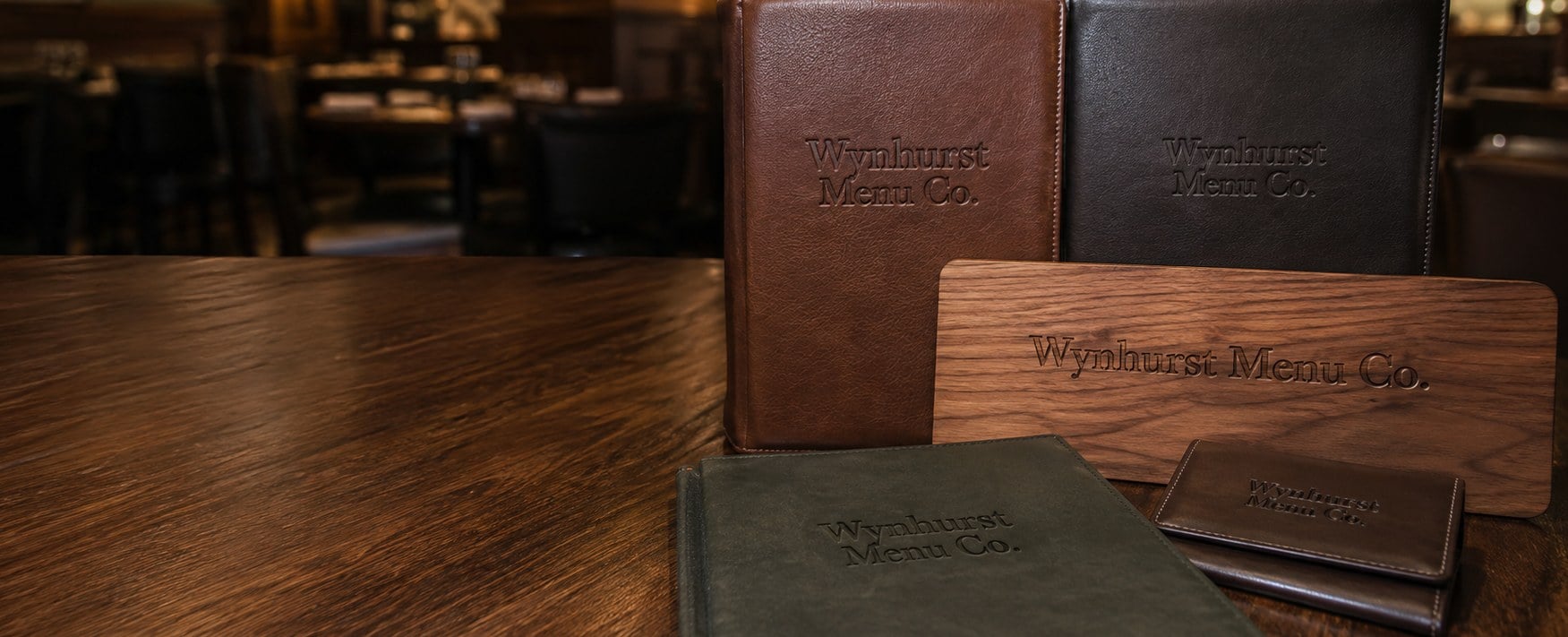
- Wipe with a barely damp cloth, then dry immediately.
- Condition full-grain leather occasionally; faux and bonded leather need no conditioner.
- Store covers dry, loosely stacked and away from heat and sunlight.
- Free mockup within 24 hours, unlimited free revisions, pay nothing until you approve.
- Standard turnaround about 2 weeks, faster with express shipping.
How do you make leather menu covers last through years of service?
Leather menu covers last longest when three habits are in place: a gentle daily wipe-down with a soft, barely damp cloth, a dry and upright storage spot away from heat, and a simple rotation so the same covers are not handled every single shift. None of these takes special equipment, and all of them can be built into the closing checklist your team already uses.
Most wear on leather menu covers does not come from age. It comes from wet hands, spilled drinks left to dry, covers stacked under heavy items, and covers stored next to a heat lamp or a dish machine vent. Fix those few causes and a set of covers keeps its color, its shape and its logo detail far longer.
The care routine also depends on what the covers are made from. Full-grain leather, bonded leather and faux leather each react differently to water, cleaners and sunlight, so the first step is knowing which material is on your tables. If you are still choosing, the material decision and the care plan should be made together, because a cover that suits your service style needs far less maintenance.
Which menu cover material holds up best in a busy restaurant?
The best material for leather menu covers in a busy restaurant is the one that matches how the covers are handled. Full-grain leather develops character and patina over time, faux leather shrugs off water and frequent wiping, and bonded leather offers the leather look at a different budget level but is less forgiving once the surface is scuffed.
| Material | How it wears | Best fit | Care priority |
|---|---|---|---|
| Full-grain leather | Softens and darkens gradually; small marks blend into the patina | Fine dining, steakhouses, hotel restaurants, wine lists | Keep dry, condition occasionally, avoid harsh cleaners |
| Bonded leather | Holds its look indoors; surface can show scuffs at corners and edges | Indoor dining rooms with moderate handling | Gentle wipe only, protect corners in storage |
| Faux leather | Resists water and stains; keeps a uniform surface | Patios, pool bars, brunch service, high-turn casual dining | Frequent wipe-downs are fine; keep out of direct sun when stored |
Many restaurants mix materials: full-grain leather menu covers in the main dining room and faux leather covers on the terrace, with the same logo finish across both so the brand still reads as one set. See the full-grain leather menu covers and faux leather and vegan covers pages to compare the styles Custom Leather Menu Covers offers.
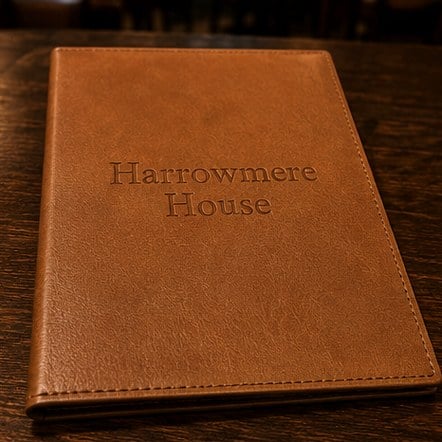
What should staff use to wipe down leather menu covers between guests?
Staff should wipe leather menu covers with a soft cloth that is only slightly damp, then dry the surface with a second clean cloth straight away. That two-cloth method removes fingerprints and crumbs without soaking the leather or leaving water rings, and it works on full-grain, bonded and faux leather alike.
A few rules keep the wipe-down from doing harm over time:
- Wring the cloth out well. The cover should look clean, not wet. Standing water is what stains real leather and lifts edges.
- Skip the sanitizer bucket for real leather. Strong solutions used on tables and bar tops can dry out and discolor full-grain leather menu covers. Use a mild soap solution, and test any product on the back panel first.
- Wipe the logo area gently. A debossed logo collects crumbs in its recesses; a soft brush or the corner of a dry cloth clears it without rubbing at the surface.
- Clean the inside too. Inner panels and insert pockets pick up grease from fingers turning pages. A quick wipe at closing keeps inserts from sticking.
- Treat spills immediately. Blot, do not rub. Red wine and oil are far easier to lift in the first minutes than at the end of service.
Faux leather menu covers tolerate more frequent cleaning, which is one reason they are popular for outdoor and family dining.
Do full-grain leather menu covers need conditioning?
Full-grain leather menu covers benefit from an occasional light conditioning, because natural leather slowly loses oils with handling and repeated wiping. A thin coat of a neutral leather conditioner, rubbed in with a soft cloth and buffed off, keeps the surface supple and helps prevent the fine surface cracking that dry leather can develop.
Use a conditioner sparingly. Too much leaves a tacky finish that attracts dust and can darken lighter colors unevenly. Test on the back panel or spine before treating a whole set, and keep conditioner away from foil-stamped logos, since oily products can dull a metallic finish over time.
Bonded and faux leather menu covers do not need conditioning. Their surface is a coating rather than open leather, so conditioner simply sits on top. A clean, dry cloth is all those covers need.
If your team would rather not add a conditioning step at all, that is a good reason to look at faux leather for high-traffic outlets and keep full-grain leather for the spaces where its patina is part of the experience, such as a wine list or a private dining room.
How should leather menu covers be stored between shifts?
Leather menu covers should be stored upright or flat in a dry, room-temperature spot, away from heat sources, direct sunlight and damp areas such as the dish station. A dedicated shelf or slot at the host stand works well, as long as covers are not jammed tightly together or buried under heavier items.
- Let covers dry before stacking. A cover put away damp can mark the one above it or develop a musty smell.
- Stack loosely, logo up. Heavy stacks press inserts and binding hardware into the panel below and can leave impressions in soft leather.
- Keep them out of the sun. A host stand by a bright window will gradually fade real leather and can warm faux leather enough to soften it.
- Avoid heat and steam. Heat lamps, ovens and dishwasher vents dry real leather and can warp panels.
- Store spares in a box, not a bag. Leather needs some airflow; a sealed plastic bag can trap moisture.
The same storage rules apply to wine lists and check presenters, which are often handled more than the menus themselves.
How does the logo finish affect long-term wear on leather menu covers?
The logo finish on leather menu covers affects how the brand mark looks after months of handling. A blind deboss is pressed into the leather, so there is nothing on the surface to rub away; the mark simply ages with the cover. Foil stamping adds a metallic or colored layer that reads crisply but should be wiped gently and kept clear of oily products.
A debossed leather patch adds a separate panel carrying the logo, which can be a smart choice if you want a contrasting color with the durability of a pressed mark. Whichever finish you choose, Custom Leather Menu Covers shows it on the free mockup so you can judge placement and contrast before anything is produced.
Placement matters for wear as well. Logos centered on the front panel are touched less than marks near the opening edge, where thumbs land every time a guest opens the cover.
When is it time to replace leather menu covers?
Leather menu covers are due for replacement when wear starts working against the dining room: corners that have lifted or split, binding hardware that no longer holds inserts firmly, stains that cleaning will not lift, or a logo that has worn unevenly. A rebrand or a new menu format is also a natural replacement point.
You rarely need to replace a whole set at once. Pull the worst covers from service, keep the best for the main room, and reorder to the same specification so new and existing covers match. Keeping your approved artwork and cover details on file makes that reorder straightforward. Custom Leather Menu Covers can work from your existing design, return a fresh mockup within 24 hours, and produce in about 2 weeks, with faster turnaround available with express shipping.
Good care stretches the time between replacements, but the right cover choice at the start does more. Tell the team how the covers will be used, where they will be stored and how often the menu changes, and the mockup can reflect a material and binding that suits that reality.
How do you order leather menu covers built for your service style?
Ordering leather menu covers built for your service style starts with a short brief: where the covers will be used, which material you prefer, your logo, and how the menu inserts change. Send that through the quote form and Custom Leather Menu Covers returns a free mockup within 24 hours.
- Share your outlets, from dining room to patio, and how each is used.
- Choose a material for each outlet, or ask for a recommendation based on handling and cleaning needs.
- Review the mockup and request changes; revisions are unlimited and free.
- Approve the design. You pay nothing until you approve, and standard production takes about 2 weeks.
The how it works page walks through each step in more detail.
Frequently asked questions
Can leather menu covers go on an outdoor patio without being damaged?
Leather menu covers made from faux leather are the safer choice for an outdoor patio, because they resist water and wipe clean after a sudden shower. Full-grain leather can work under a covered terrace, but it should come inside at the end of service and never sit in direct sun or rain. Custom Leather Menu Covers can match both materials with the same logo so indoor and outdoor sets look related.
What should I do if red wine spills on a full-grain leather menu cover?
A full-grain leather menu cover with a red wine spill should be blotted at once with a dry, absorbent cloth, pressing rather than rubbing so the wine does not spread into the grain. Then wipe with a cloth barely dampened with water and let the cover air dry away from heat. Never use a hair dryer or bleach-based cleaner, since both can leave a harder mark than the wine.
Can a debossed logo on leather menu covers fill up with dirt over time?
A debossed logo on leather menu covers can collect crumbs and dust in its pressed recesses, especially on covers used at brunch or in bars. A soft brush or the corner of a dry cloth run along the lines during the closing wipe-down keeps the detail crisp. Avoid pushing wet cloths or cleaner into the deboss, because moisture can sit in the grooves and darken the leather there.
Do faux leather menu covers crack or peel as they age?
Faux leather menu covers can eventually show surface wear at folds and corners, usually where covers are bent backward, stored near heat or left in strong sun. Keeping them flat, out of direct sunlight and away from kitchen heat slows that process considerably. Custom Leather Menu Covers can recommend a faux leather style for heavy use when you describe the outlet in your quote request.
Is it safe to use disinfectant wipes on leather menu covers?
Leather menu covers in faux leather generally tolerate mild disinfecting wipes, but strong solvent or alcohol-heavy wipes can dry out full-grain leather and dull foil logos. Test any wipe on the back panel first and dry the cover afterward. Many restaurants keep a separate mild soap solution just for covers so the stronger table sanitizer never touches them.
How can a restaurant tell whether its menu covers are real leather or faux leather?
Leather menu covers in real full-grain leather show natural variation in the grain, a soft hand feel and a gradual patina, while faux leather has a uniform repeating texture and a slightly smoother coated surface. The order confirmation or original quote usually states the material. Custom Leather Menu Covers lists the material on every mockup, so the care routine is clear from the start.
Should a restaurant rotate its leather menu covers between outlets?
Rotating leather menu covers spreads handling across the whole set, so no single group of covers wears out years ahead of the rest. A simple approach is to swap the covers at the host stand with spares from storage every few months. Rotation works best when every cover in the set shares the same material, color and logo finish, which is easiest when they come from one approved design.
Can worn leather menu covers be refreshed instead of replaced?
Lightly worn leather menu covers in full-grain leather can often be refreshed with a careful clean and a thin coat of neutral leather conditioner, which restores some depth and suppleness. Covers with split corners, failing binding or stains that will not lift are better replaced. Custom Leather Menu Covers can reproduce your existing design so replacement covers sit comfortably beside the refreshed ones.
Does sunlight from a host stand window fade leather menu covers?
Leather menu covers left in strong sunlight can fade or change tone over time, and real leather may also dry out, while faux leather can soften when it gets warm. Moving the storage spot a few feet out of direct light usually solves the problem. If the host stand cannot move, a closed cabinet or drawer keeps the covers shaded between services.
Which binding style is easiest to keep clean on leather menu covers?
Leather menu covers with simple corner pockets or elastic cords are usually the easiest to keep clean, because there are fewer hardware edges where crumbs and grease collect. Screw posts and rings hold inserts securely but need a quick wipe around the hardware at closing. Custom Leather Menu Covers can show different binding options on the free mockup so you can weigh cleaning against how often the menu changes.
Can matching check presenters and wine lists be cared for the same way as leather menu covers?
Check presenters and wine lists made to match leather menu covers follow the same care routine: a barely damp wipe, immediate drying, occasional conditioning for full-grain leather and dry storage. Check presenters often get more handling than menus, so they may need wiping more often. Ordering them in the same material as the covers keeps the cleaning routine identical across the set.
Get a free mockup for your leather menu covers
Send your logo or idea and the quantity you have in mind. Custom Leather Menu Covers returns a free mockup within 24 hours, you approve the design before anything is produced, and standard turnaround is about two weeks with faster options available. Get a custom quote.