Category: Buying Guides

  • When to Order Leather Menu Covers: Planning Backward From Opening Night or a Menu Change

    When to Order Leather Menu Covers: Planning Backward From Opening Night or a Menu Change

    Published November 27, 2026. Last updated November 27, 2026.

    Order custom leather menu covers at least three to four weeks before the first service that needs them. Custom Leather Menu Covers returns a free mockup within 24 hours and standard turnaround is about 2 weeks after approval, but the step that usually slips is locking the menu insert size and approving the logo. Plan backward from opening night, not forward from today.
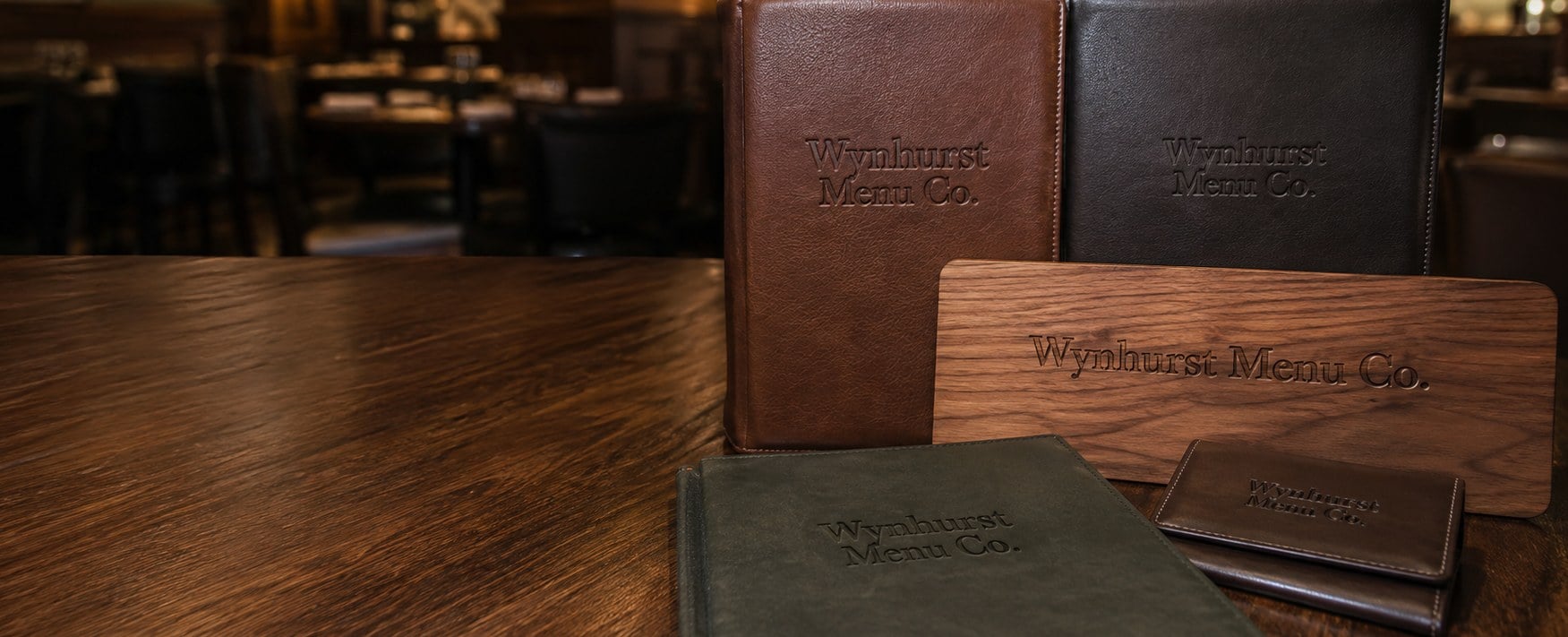
    When to Order Leather Menu Covers: Planning Backward From Opening Night or a Menu Change - custom printed leather menu covers from Custom Leather Menu Covers
    Custom leather menu covers with a logo, produced by Custom Leather Menu Covers.
    Key facts
    • Free mockup within 24 hours; standard turnaround about 2 weeks after approval
    • Faster turnaround is available with express shipping
    • Lock the menu insert size before ordering covers; the cover is built around it
    • Approve covers before the final menu wording is set; inserts change, covers stay
    • Pay nothing until you approve the design

    How far ahead should a restaurant order custom leather menu covers?

    A restaurant should order custom leather menu covers three to four weeks before the first service that needs them. That window covers the free mockup within 24 hours, a few days for the owner or chef to approve it, about 2 weeks of standard turnaround and a buffer for delivery and for slipping printed inserts into every cover before service.

    Restaurants that cut it close are rarely held up by production. They are held up by decisions: which logo version to use, which cover color matches the dining room, whether the wine list gets its own cover and how many pages the menu will run. Each of those questions can add days if it is still open when the mockup arrives.

    Build the timeline from the date guests first sit down, then work backward. If your opening or menu launch is fixed, set the approval date first and treat it as a hard deadline for every decision that affects the cover.

    • Comfortable: four weeks or more before service, with room for a second mockup round.
    • Workable: about three weeks, if the logo and insert size are already final.
    • Tight: under three weeks, plan on express shipping and a simpler specification.

    What does a backward timeline for leather menu covers look like?

    A backward timeline for leather menu covers starts at the first service and subtracts each stage: insert loading, delivery, about 2 weeks of production, approval and the 24-hour mockup. Writing the dates down makes it obvious which decision is the real bottleneck, which is almost always the menu format rather than the covers themselves.

    StageWhenWhat has to be decided
    Lock the menu formatAbout four weeks outInsert size, page count, single or multi-panel
    Request the quote and mockupSame dayLogo file, cover style, color, quantity
    Mockup returnedWithin 24 hoursLogo size and placement, finish
    Approve the designA few days laterFinal sign-off by the decision maker
    ProductionAbout 2 weeksNothing, unless you change the specification
    Delivery and insert loadingFinal days before servicePrint inserts, load covers, train staff

    Keep the approval stage short by naming one person who signs off. When a chef, a general manager and an owner each review the mockup separately, the approval step can quietly turn into a week. The how it works page shows each step from quote to delivery.
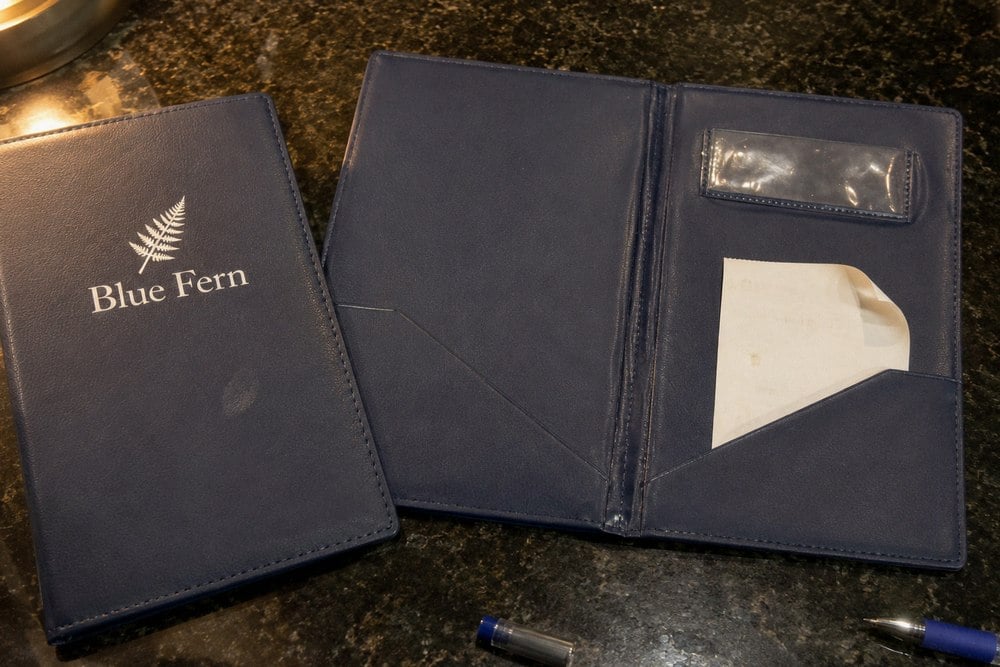
    Custom leather menu covers with a logo from Custom Leather Menu Covers
    Custom leather menu covers from Custom Leather Menu Covers.

    Why should you lock the menu insert size before ordering leather menu covers?

    You should lock the menu insert size before ordering leather menu covers because each cover is built around the insert it holds. A cover sized for one page format will not hold a taller or wider sheet, and changing the format after approval means changing the cover. The menu wording can still change; the paper size and page count should not.

    This is the most common reason menu cover orders lose time. A chef reworks the menu, it grows from one page to two, and suddenly a single-panel cover needs to become a two-panel or screw-post style. Settle three things before you request a mockup:

    1. Insert size: the exact sheet size your printer will use.
    2. Page count: single page, two panels, tri-fold or a multi-page book.
    3. Attachment: corner pockets, a center cord or screw-post menu covers that let you add pages.

    Once the format is fixed, the menu wording can keep evolving until the last week. That is the advantage of covers with removable inserts: the cover is a long-term purchase, the inserts are not. If you also need printed pages, menu inserts and printing can be planned on the same quote so sizes match.

    How should a new restaurant time menu covers around its opening?

    A new restaurant should time its leather menu covers to arrive before the soft opening and staff training, not on opening night. Servers need to practice presenting menus, front-of-house managers need to load inserts and photographers often shoot the dining room before launch. Covers that arrive the day before doors open leave no room for any of that.

    Opening timelines move, and menu covers are easy to forget when builders, inspections and hiring all compete for attention. Put the menu cover approval date on the same calendar as the other opening milestones so it gets the same attention.

    • Order early: covers can be approved as soon as the logo and menu format are final, even if the opening date shifts.
    • Plan for every station: dining room menus, the bar, the wine list and check presenters so the set matches.
    • Add a few spares: new restaurants often add seats or a patio after opening.

    The custom leather menu covers for restaurant openings page covers style choices for a launch. If you are still choosing between formats, the leather menu covers vs menu clipboards comparison is a quick way to decide before the timeline starts.

    When should hotels, clubs and established restaurants reorder leather menu covers?

    Hotels, clubs and established restaurants should reorder leather menu covers about a month before a planned refresh, such as a seasonal menu relaunch, a renovation reopening or a rebrand. Reordering is faster than a first order because the logo, color and size are already approved, but it still needs about 2 weeks of production plus delivery.

    Good triggers for a reorder are worn corners and edges on the busiest covers, a new outlet such as a pool bar or private dining room, or a logo update. Rather than waiting until covers look tired during a busy season, schedule refreshes for slower months so delivery is never competing with peak service.

    TriggerPlan the order
    Seasonal menu relaunchAbout a month before the relaunch
    Renovation or reopeningWith the furniture and decor schedule
    New outlet or private dining roomOnce the outlet’s menu format is set
    Logo or brand updateAs soon as the new artwork is final
    Visible wear on coversBefore the next busy season, not during it

    Hotel groups and country clubs with several outlets can see examples on the hotels and resorts page.

    What can you do if your service date is too close for standard turnaround?

    If your service date is too close for standard turnaround, ask about express shipping when you request the quote and simplify the specification so approval is immediate. A single logo position, one cover size and a color the team already agrees on remove the back-and-forth that usually costs more time than production.

    • Approve the first mockup if it is right, rather than asking for a second variation.
    • Send a clean vector logo so no artwork cleanup is needed.
    • Split the order: dining room covers on the urgent timeline, wine list and dessert covers on standard timing.
    • Use existing inserts for the first services if the new menu is still being edited.

    Custom Leather Menu Covers returns the mockup within 24 hours, so a tight timeline is usually still possible if decisions are made the same day. The fastest route is to send the logo, quantity, cover style and insert size together in one quote request.

    Frequently asked questions

    What is the latest point to approve leather menu covers for a fixed opening date?

    Leather menu covers for a fixed opening date should be approved at least two and a half weeks before the first service. Standard turnaround is about 2 weeks after approval, and Custom Leather Menu Covers returns the mockup within 24 hours, so the approval date is what you control. Anything later should be quoted with express shipping.

    Can I approve leather menu covers before the final menu wording is written?

    Leather menu covers can be approved before the final menu wording is written, as long as the insert size, page count and attachment style are fixed. The cover holds removable inserts, so the chef can keep editing dishes while production runs. Custom Leather Menu Covers only needs the format and logo to build the mockup.

    Does adding a second panel to the menu change the leather menu cover timeline?

    Adding a second panel changes leather menu covers if it happens after approval, because the cover format changes from single-panel to two-panel and a new mockup is needed. Decide the page count before requesting the quote. Custom Leather Menu Covers can suggest a screw-post style if you expect the page count to grow.

    Should the wine list and dessert covers be ordered at the same time as main menu covers?

    Wine list and dessert leather menu covers are best ordered with the main menu covers so color, finish and logo placement match across the table. If time is short, the main dining covers can run first and the others follow on standard timing. Custom Leather Menu Covers can mockup the full set together.

    How early should a hotel plan menu covers for a renovation reopening?

    A hotel should plan leather menu covers for a renovation reopening alongside the furniture and decor schedule, about a month before the outlets reopen. That leaves time for the 24-hour mockup, approval across departments and about 2 weeks of production. Custom Leather Menu Covers can quote every outlet in one request.

    Is a reorder of leather menu covers faster than a first order?

    A reorder of leather menu covers is usually faster to approve than a first order because the logo, color and size are already settled, so the mockup step is quick. Production still takes about 2 weeks after approval. Send the previous order details and Custom Leather Menu Covers can start the reorder from that approved design.

    What slows down a leather menu cover order the most?

    The biggest delay on a leather menu cover order is usually an unfinished decision: the insert size, the logo version or who approves the mockup. Production timing is predictable at about 2 weeks. Custom Leather Menu Covers recommends naming one approver and fixing the menu format before you request the quote.

    Can leather menu covers arrive before the soft opening for staff training?

    Leather menu covers can arrive before a soft opening if they are approved about three weeks before the training date rather than the public opening. Servers then practice presenting menus and managers load inserts in advance. Custom Leather Menu Covers suggests treating the soft opening as the real deadline.

    When is the best season to refresh worn leather menu covers?

    The best season to refresh worn leather menu covers is your slowest stretch of the year, so new covers arrive before the next busy period instead of during it. Order about a month ahead of the date you want them in service. Custom Leather Menu Covers can match the existing logo placement and color.

    Can I split an urgent leather menu cover order into two deliveries?

    An urgent leather menu cover order can be split so the dining room covers run first and secondary items such as wine list covers or check presenters follow on standard timing. Splitting keeps the most visible pieces on schedule. Mention the split in your request and Custom Leather Menu Covers will quote both parts.

    What should I send to start a leather menu cover order on a tight deadline?

    To start a leather menu cover order on a tight deadline, send the logo as a vector file, the insert size and page count, the cover style and color, the quantity and your service date in one message. Custom Leather Menu Covers returns the mockup within 24 hours and can advise on express shipping.

    Get a free mockup for your leather menu covers

    Send your logo or idea and the quantity you have in mind. Custom Leather Menu Covers returns a free mockup within 24 hours, you approve the design before anything is produced, and standard turnaround is about two weeks with faster options available. Get a custom quote.
  • Leather Menu Covers for Restaurant Week and Valentine’s Day: A Winter Planning Guide

    Leather Menu Covers for Restaurant Week and Valentine’s Day: A Winter Planning Guide

    Published November 17, 2026. Last updated November 17, 2026.

    Leather menu covers for Restaurant Week and Valentine's Day work best when ordered right after the holiday rush, sized for a short prix fixe insert, and finished so they stay in service all year. Custom Leather Menu Covers returns a free mockup within 24 hours and standard turnaround is about 2 weeks, so a winter order placed early arrives before the busiest covers of the season.

    Leather Menu Covers for Restaurant Week and Valentine's Day: A Winter Planning Guide - custom printed leather menu covers from Custom Leather Menu Covers
    Custom leather menu covers with a logo, produced by Custom Leather Menu Covers.
    Key facts
    • Order winter covers right after the holidays so they arrive before Restaurant Week and Valentine's Day.
    • A two-panel or single-panel cover suits a short prix fixe insert.
    • Keep the logo timeless so seasonal covers stay in service all year.
    • Free mockup within 24 hours, unlimited free revisions, pay nothing until you approve.
    • Standard turnaround about 2 weeks, faster with express shipping.

    Why do Restaurant Week and Valentine's Day matter for leather menu covers?

    Restaurant Week and Valentine’s Day are two of the few winter moments when a dining room fills with first-time guests who judge the restaurant in the first minute at the table. Leather menu covers are part of that first minute. A worn, mismatched or sticky cover undercuts a carefully priced prix fixe; a clean, logo-debossed cover tells a new guest the evening is worth the reservation.

    The two events also put unusual pressure on the menu itself. Restaurant Week usually means a short fixed menu printed separately from the regular one, and Valentine’s Day often means a tasting or couples menu with a wine pairing. Both are temporary inserts that still need a permanent, good-looking cover around them.

    That is why winter is a practical time to review your leather menu covers. The holiday season has just tested every cover in the building, you can see which ones need replacing, and there is still time to order new covers before the next wave of bookings. Planning the order now avoids scrambling for covers in the same week the reservation book fills up.

    When should a restaurant order leather menu covers for winter events?

    A restaurant should order leather menu covers for winter events as soon as the holiday season ends, or even during it if the cover style is already decided. Custom Leather Menu Covers sends a free mockup within 24 hours of receiving your logo, and standard turnaround after approval is about 2 weeks, with faster options available through express shipping.

    Work backward from the first event date rather than from the day you happen to remember the order. A simple planning sequence looks like this:

    1. Audit the covers you have. Count how many survived the holidays in good condition and how many are scuffed, stained or missing.
    2. Decide the menu formats. Confirm whether the Restaurant Week and Valentine’s Day menus are single sheets, folded cards or multi-page inserts.
    3. Request the mockup. Send the logo, cover color, finish and quantity through the quote form.
    4. Approve and allow production time. Leave about 2 weeks plus shipping, and build in a buffer for revisions.
    5. Receive and check before service. Open every carton, test the inserts and train staff on care before the first booking.

    Ordering early also gives you room for unlimited free revisions without pressure, so the color and logo placement are right the first time.

    Full-Grain Leather Menu Covers - one of the custom leather menu covers styles from Custom Leather Menu Covers
    Full-Grain Leather Menu Covers.

    Which leather menu cover style suits a prix fixe Restaurant Week menu?

    A single-panel or two-panel leather menu cover suits most prix fixe Restaurant Week menus, because those menus are short and usually fit on one or two pages. A slim cover keeps a three-course list from looking lost inside a bulky book, and it is easier for servers to carry several at once during a packed seating.

    The right choice depends on how the menu is built and what else it needs to hold. The table below compares common formats for winter event menus.

    Cover formatBest forWhy it works in winter
    Single-panel cover with corners or a ribbonOne-page Restaurant Week or Valentine’s Day menusInserts swap in seconds when the event ends and the regular menu returns
    Two-panel folderPrix fixe menu on one side, wine pairing or cocktails on the otherKeeps the full offer in one place without a separate drinks list
    Multi-page book with screw postsRestaurants that keep the full a la carte menu available alongside the event menuLets the event menu sit at the front while the regular pages stay in place
    Matching check presenterAny winter event with a set price per guestFinishes the evening in the same leather and logo as the menu

    For a full breakdown of panel formats, read the guide to clipboard and panel menus before you request the mockup.

    Should winter menu covers carry an event name or stay timeless?

    Winter leather menu covers should usually stay timeless, with the restaurant logo debossed or foil-stamped on the front and the event details printed on the insert instead. A cover that says only the restaurant name works during Restaurant Week, on Valentine’s Day, through spring and for every regular service afterward, which makes the order far better value over its service life.

    The insert is the right place for anything that changes: the event name, the course list, the wine pairing and any special note to guests. Inserts are cheap to reprint and easy to swap, while the cover is a long-term piece of the dining room.

    There are a few cases where an event mark on the cover makes sense:

    • A small commemorative set for a private Valentine’s Day dining room, kept separate from the everyday covers.
    • A recurring annual event the restaurant hosts itself, where the same covers come out every winter.
    • A wine dinner series with its own name that runs several times a year.

    For a refined seasonal touch without dating the cover, consider a contrasting foil color or a debossed leather patch that can match both the event menus and the regular service.

    Which leather color and finish work for a Valentine's Day dinner?

    Deep, warm leather colors such as oxblood, burgundy, chocolate brown and black work best for a Valentine’s Day dinner, because they read as romantic in low candlelight without looking like a novelty. These colors also suit the rest of the year, so the covers stay useful long after the evening is over.

    Finish matters as much as color in a dim room. A blind deboss gives a quiet, tactile logo that guests notice when they pick up the cover. Gold or silver foil catches candlelight and reads more clearly when lighting is low. If your dining room is especially dark for the evening, foil is the safer choice for legibility.

    Material is the other decision. Full-grain leather looks and feels the most premium, which suits a high-end Valentine’s Day tasting menu. Faux leather menu covers resist wine and dessert spills better and are easier to wipe between seatings, which helps when a single evening turns the dining room several times. Many restaurants keep full-grain covers for the main room and faux leather for the bar and lounge.

    How should leather menu covers handle the January menu reset?

    Leather menu covers should be chosen so the January menu reset only changes the inserts, not the covers. Many restaurants rewrite their menu after the holidays, trimming dishes, adding lighter options or adjusting prices, and the cover that holds those pages should survive every one of those changes without a reorder.

    Three choices make a cover reset-proof:

    • A binding that accepts new pages easily. Corners, ribbons and screw posts let staff swap pages in minutes. The menu inserts and printing page explains how inserts fit each binding.
    • An insert size with room to grow. If the winter menu is longer than the old one, the cover still needs to hold it cleanly.
    • A logo-only front. No dates, seasons or dish names that go stale.

    If the reset includes a rebrand, a new logo or a new restaurant name, that is the moment to replace covers, and the winter timing still works: request the mockup as soon as the new artwork is final.

    What should a restaurant send to get a winter leather menu cover quote?

    To get an accurate winter quote for leather menu covers, send Custom Leather Menu Covers your logo file, the cover style, the leather color, the logo finish, the insert size, the quantity and the date the covers need to be in service. Those details are what drive the quote, and missing any of them slows down the mockup.

    Include a short note on the events you are planning for, such as Restaurant Week, a Valentine’s Day tasting menu or a January relaunch, so the mockup reflects how the covers will be used. Mention whether you need matching wine lists or check presenters; the wine list and check presenter page shows what can be matched to the menus.

    Once the request arrives, the free mockup comes back within 24 hours, revisions are unlimited and free, and you pay nothing until you approve the design. Start your winter order through the custom quote form.

    Frequently asked questions

    Can leather menu covers ordered for Restaurant Week be used for the regular menu afterward?

    Leather menu covers ordered for Restaurant Week can stay in service for the regular menu as long as the cover carries only the restaurant logo. Print the event name and courses on the insert, then swap the pages when the week ends. Custom Leather Menu Covers can show you a timeless design in a free mockup within 24 hours so the order keeps working all year.

    Is a Restaurant Week menu too short for a multi-page leather menu cover?

    A multi-page leather menu cover can look empty around a short Restaurant Week menu, so most restaurants choose a single-panel or two-panel cover for the event. If the full a la carte menu stays available at the same time, a multi-page book with screw posts works well, with the event menu placed at the front and the regular pages behind it.

    Can one leather menu cover hold a Valentine's Day tasting menu and a wine pairing list?

    A two-panel leather menu cover can hold a Valentine's Day tasting menu on one side and the wine pairing on the other, which keeps the whole offer in front of the guest at once. Ask Custom Leather Menu Covers to show the two-panel layout in your mockup so you can confirm both inserts fit cleanly before approving the order.

    Which logo finish reads best on leather menu covers in a candlelit dining room?

    Gold or silver foil usually reads best on leather menu covers in a candlelit dining room, because the metallic finish catches low light and keeps the logo legible. A blind deboss looks elegant but relies on shadow to show the logo, so it can disappear in very dim rooms. The free mockup lets you compare both finishes before deciding.

    Are burgundy or oxblood leather menu covers only suitable for Valentine's Day?

    Burgundy and oxblood leather menu covers suit far more than Valentine's Day. Both colors feel warm and classic in steakhouses, wine bars, hotel restaurants and traditional dining rooms throughout the year. Choosing one of these shades for a winter order gives the evening a romantic look while leaving you with covers that fit every regular service afterward.

    How late is too late to order leather menu covers for Valentine's Day?

    Leather menu covers for Valentine's Day are best ordered at least several weeks ahead, because standard turnaround is about 2 weeks after mockup approval, plus shipping and time for revisions. Faster options are available with express shipping. Custom Leather Menu Covers returns the free mockup within 24 hours, so the main delay is usually how quickly the design is approved.

    Should Restaurant Week leather menu covers include the event dates on the insert or the cover?

    Restaurant Week dates belong on the printed insert rather than on the leather menu cover. Inserts are easy to reprint and replace, while a cover with dates goes out of date as soon as the event ends. Keeping the cover logo-only means the same leather menu covers can return every winter and serve the regular menu in between.

    Can a restaurant order a small separate set of leather menu covers for a private Valentine's Day room?

    A restaurant can order a small separate set of leather menu covers for a private Valentine's Day dining room, in a different color or finish from the main room. Custom Leather Menu Covers can mock up both sets together so you can see how they compare, and the private set can be reused for anniversaries and special dinners later in the year.

    Do faux leather menu covers handle busy Valentine's Day turnover better than full-grain leather?

    Faux leather menu covers handle busy Valentine's Day turnover well because the surface resists wine and dessert spills and wipes clean quickly between seatings. Full-grain leather looks more premium but needs gentler care. Many restaurants use full-grain leather menu covers in the main dining room and faux leather in the bar or lounge where turnover is fastest.

    Can leather menu covers be updated for a January menu relaunch without reordering?

    Leather menu covers can carry a January menu relaunch without a reorder when the binding allows easy page changes and the cover shows only the restaurant logo. Corners, ribbons and screw posts let staff swap pages quickly. A reorder only makes sense if the relaunch includes a new logo, a new name or a different insert size.

    What should be checked on leather menu covers before a Restaurant Week service begins?

    Before Restaurant Week service, check that every leather menu cover is clean, the logo finish is intact, the inserts sit straight in the binding and the count matches your seating plan. Set aside any scuffed or stained covers. Doing this check a few days early leaves time to reprint inserts or request replacements from Custom Leather Menu Covers if needed.

    Can matching check presenters be ordered with winter leather menu covers?

    Matching check presenters can be ordered alongside winter leather menu covers in the same leather, color and logo finish. A set price per guest during Restaurant Week or Valentine's Day makes the bill presentation part of the experience, and a matching presenter finishes the evening consistently. Include the presenter quantity in your quote request so both items appear in the mockup.

    Get a free mockup for your leather menu covers

    Send your logo or idea and the quantity you have in mind. Custom Leather Menu Covers returns a free mockup within 24 hours, you approve the design before anything is produced, and standard turnaround is about two weeks with faster options available. Get a custom quote.

  • How to Care for Leather Menu Covers: Cleaning, Storage and Service Life

    How to Care for Leather Menu Covers: Cleaning, Storage and Service Life

    Published November 10, 2026. Last updated November 10, 2026.

    Caring for leather menu covers comes down to a gentle two-cloth wipe-down, occasional conditioning for full-grain leather, and dry storage away from heat and sun. Choosing the right material for each outlet does the rest. Custom Leather Menu Covers matches material, binding and logo finish to how your covers are handled, and returns a free mockup within 24 hours.

    How to Care for Leather Menu Covers: Cleaning, Storage and Service Life - custom printed leather menu covers from Custom Leather Menu Covers
    Custom leather menu covers with a logo, produced by Custom Leather Menu Covers.
    Key facts
    • Wipe with a barely damp cloth, then dry immediately.
    • Condition full-grain leather occasionally; faux and bonded leather need no conditioner.
    • Store covers dry, loosely stacked and away from heat and sunlight.
    • Free mockup within 24 hours, unlimited free revisions, pay nothing until you approve.
    • Standard turnaround about 2 weeks, faster with express shipping.

    How do you make leather menu covers last through years of service?

    Leather menu covers last longest when three habits are in place: a gentle daily wipe-down with a soft, barely damp cloth, a dry and upright storage spot away from heat, and a simple rotation so the same covers are not handled every single shift. None of these takes special equipment, and all of them can be built into the closing checklist your team already uses.

    Most wear on leather menu covers does not come from age. It comes from wet hands, spilled drinks left to dry, covers stacked under heavy items, and covers stored next to a heat lamp or a dish machine vent. Fix those few causes and a set of covers keeps its color, its shape and its logo detail far longer.

    The care routine also depends on what the covers are made from. Full-grain leather, bonded leather and faux leather each react differently to water, cleaners and sunlight, so the first step is knowing which material is on your tables. If you are still choosing, the material decision and the care plan should be made together, because a cover that suits your service style needs far less maintenance.

    Which menu cover material holds up best in a busy restaurant?

    The best material for leather menu covers in a busy restaurant is the one that matches how the covers are handled. Full-grain leather develops character and patina over time, faux leather shrugs off water and frequent wiping, and bonded leather offers the leather look at a different budget level but is less forgiving once the surface is scuffed.

    MaterialHow it wearsBest fitCare priority
    Full-grain leatherSoftens and darkens gradually; small marks blend into the patinaFine dining, steakhouses, hotel restaurants, wine listsKeep dry, condition occasionally, avoid harsh cleaners
    Bonded leatherHolds its look indoors; surface can show scuffs at corners and edgesIndoor dining rooms with moderate handlingGentle wipe only, protect corners in storage
    Faux leatherResists water and stains; keeps a uniform surfacePatios, pool bars, brunch service, high-turn casual diningFrequent wipe-downs are fine; keep out of direct sun when stored

    Many restaurants mix materials: full-grain leather menu covers in the main dining room and faux leather covers on the terrace, with the same logo finish across both so the brand still reads as one set. See the full-grain leather menu covers and faux leather and vegan covers pages to compare the styles Custom Leather Menu Covers offers.

    Full-Grain Leather Menu Covers - one of the custom leather menu covers styles from Custom Leather Menu Covers
    Full-Grain Leather Menu Covers.

    What should staff use to wipe down leather menu covers between guests?

    Staff should wipe leather menu covers with a soft cloth that is only slightly damp, then dry the surface with a second clean cloth straight away. That two-cloth method removes fingerprints and crumbs without soaking the leather or leaving water rings, and it works on full-grain, bonded and faux leather alike.

    A few rules keep the wipe-down from doing harm over time:

    • Wring the cloth out well. The cover should look clean, not wet. Standing water is what stains real leather and lifts edges.
    • Skip the sanitizer bucket for real leather. Strong solutions used on tables and bar tops can dry out and discolor full-grain leather menu covers. Use a mild soap solution, and test any product on the back panel first.
    • Wipe the logo area gently. A debossed logo collects crumbs in its recesses; a soft brush or the corner of a dry cloth clears it without rubbing at the surface.
    • Clean the inside too. Inner panels and insert pockets pick up grease from fingers turning pages. A quick wipe at closing keeps inserts from sticking.
    • Treat spills immediately. Blot, do not rub. Red wine and oil are far easier to lift in the first minutes than at the end of service.

    Faux leather menu covers tolerate more frequent cleaning, which is one reason they are popular for outdoor and family dining.

    Do full-grain leather menu covers need conditioning?

    Full-grain leather menu covers benefit from an occasional light conditioning, because natural leather slowly loses oils with handling and repeated wiping. A thin coat of a neutral leather conditioner, rubbed in with a soft cloth and buffed off, keeps the surface supple and helps prevent the fine surface cracking that dry leather can develop.

    Use a conditioner sparingly. Too much leaves a tacky finish that attracts dust and can darken lighter colors unevenly. Test on the back panel or spine before treating a whole set, and keep conditioner away from foil-stamped logos, since oily products can dull a metallic finish over time.

    Bonded and faux leather menu covers do not need conditioning. Their surface is a coating rather than open leather, so conditioner simply sits on top. A clean, dry cloth is all those covers need.

    If your team would rather not add a conditioning step at all, that is a good reason to look at faux leather for high-traffic outlets and keep full-grain leather for the spaces where its patina is part of the experience, such as a wine list or a private dining room.

    How should leather menu covers be stored between shifts?

    Leather menu covers should be stored upright or flat in a dry, room-temperature spot, away from heat sources, direct sunlight and damp areas such as the dish station. A dedicated shelf or slot at the host stand works well, as long as covers are not jammed tightly together or buried under heavier items.

    1. Let covers dry before stacking. A cover put away damp can mark the one above it or develop a musty smell.
    2. Stack loosely, logo up. Heavy stacks press inserts and binding hardware into the panel below and can leave impressions in soft leather.
    3. Keep them out of the sun. A host stand by a bright window will gradually fade real leather and can warm faux leather enough to soften it.
    4. Avoid heat and steam. Heat lamps, ovens and dishwasher vents dry real leather and can warp panels.
    5. Store spares in a box, not a bag. Leather needs some airflow; a sealed plastic bag can trap moisture.

    The same storage rules apply to wine lists and check presenters, which are often handled more than the menus themselves.

    How does the logo finish affect long-term wear on leather menu covers?

    The logo finish on leather menu covers affects how the brand mark looks after months of handling. A blind deboss is pressed into the leather, so there is nothing on the surface to rub away; the mark simply ages with the cover. Foil stamping adds a metallic or colored layer that reads crisply but should be wiped gently and kept clear of oily products.

    A debossed leather patch adds a separate panel carrying the logo, which can be a smart choice if you want a contrasting color with the durability of a pressed mark. Whichever finish you choose, Custom Leather Menu Covers shows it on the free mockup so you can judge placement and contrast before anything is produced.

    Placement matters for wear as well. Logos centered on the front panel are touched less than marks near the opening edge, where thumbs land every time a guest opens the cover.

    When is it time to replace leather menu covers?

    Leather menu covers are due for replacement when wear starts working against the dining room: corners that have lifted or split, binding hardware that no longer holds inserts firmly, stains that cleaning will not lift, or a logo that has worn unevenly. A rebrand or a new menu format is also a natural replacement point.

    You rarely need to replace a whole set at once. Pull the worst covers from service, keep the best for the main room, and reorder to the same specification so new and existing covers match. Keeping your approved artwork and cover details on file makes that reorder straightforward. Custom Leather Menu Covers can work from your existing design, return a fresh mockup within 24 hours, and produce in about 2 weeks, with faster turnaround available with express shipping.

    Good care stretches the time between replacements, but the right cover choice at the start does more. Tell the team how the covers will be used, where they will be stored and how often the menu changes, and the mockup can reflect a material and binding that suits that reality.

    How do you order leather menu covers built for your service style?

    Ordering leather menu covers built for your service style starts with a short brief: where the covers will be used, which material you prefer, your logo, and how the menu inserts change. Send that through the quote form and Custom Leather Menu Covers returns a free mockup within 24 hours.

    1. Share your outlets, from dining room to patio, and how each is used.
    2. Choose a material for each outlet, or ask for a recommendation based on handling and cleaning needs.
    3. Review the mockup and request changes; revisions are unlimited and free.
    4. Approve the design. You pay nothing until you approve, and standard production takes about 2 weeks.

    The how it works page walks through each step in more detail.

    Frequently asked questions

    Can leather menu covers go on an outdoor patio without being damaged?

    Leather menu covers made from faux leather are the safer choice for an outdoor patio, because they resist water and wipe clean after a sudden shower. Full-grain leather can work under a covered terrace, but it should come inside at the end of service and never sit in direct sun or rain. Custom Leather Menu Covers can match both materials with the same logo so indoor and outdoor sets look related.

    What should I do if red wine spills on a full-grain leather menu cover?

    A full-grain leather menu cover with a red wine spill should be blotted at once with a dry, absorbent cloth, pressing rather than rubbing so the wine does not spread into the grain. Then wipe with a cloth barely dampened with water and let the cover air dry away from heat. Never use a hair dryer or bleach-based cleaner, since both can leave a harder mark than the wine.

    Can a debossed logo on leather menu covers fill up with dirt over time?

    A debossed logo on leather menu covers can collect crumbs and dust in its pressed recesses, especially on covers used at brunch or in bars. A soft brush or the corner of a dry cloth run along the lines during the closing wipe-down keeps the detail crisp. Avoid pushing wet cloths or cleaner into the deboss, because moisture can sit in the grooves and darken the leather there.

    Do faux leather menu covers crack or peel as they age?

    Faux leather menu covers can eventually show surface wear at folds and corners, usually where covers are bent backward, stored near heat or left in strong sun. Keeping them flat, out of direct sunlight and away from kitchen heat slows that process considerably. Custom Leather Menu Covers can recommend a faux leather style for heavy use when you describe the outlet in your quote request.

    Is it safe to use disinfectant wipes on leather menu covers?

    Leather menu covers in faux leather generally tolerate mild disinfecting wipes, but strong solvent or alcohol-heavy wipes can dry out full-grain leather and dull foil logos. Test any wipe on the back panel first and dry the cover afterward. Many restaurants keep a separate mild soap solution just for covers so the stronger table sanitizer never touches them.

    How can a restaurant tell whether its menu covers are real leather or faux leather?

    Leather menu covers in real full-grain leather show natural variation in the grain, a soft hand feel and a gradual patina, while faux leather has a uniform repeating texture and a slightly smoother coated surface. The order confirmation or original quote usually states the material. Custom Leather Menu Covers lists the material on every mockup, so the care routine is clear from the start.

    Should a restaurant rotate its leather menu covers between outlets?

    Rotating leather menu covers spreads handling across the whole set, so no single group of covers wears out years ahead of the rest. A simple approach is to swap the covers at the host stand with spares from storage every few months. Rotation works best when every cover in the set shares the same material, color and logo finish, which is easiest when they come from one approved design.

    Can worn leather menu covers be refreshed instead of replaced?

    Lightly worn leather menu covers in full-grain leather can often be refreshed with a careful clean and a thin coat of neutral leather conditioner, which restores some depth and suppleness. Covers with split corners, failing binding or stains that will not lift are better replaced. Custom Leather Menu Covers can reproduce your existing design so replacement covers sit comfortably beside the refreshed ones.

    Does sunlight from a host stand window fade leather menu covers?

    Leather menu covers left in strong sunlight can fade or change tone over time, and real leather may also dry out, while faux leather can soften when it gets warm. Moving the storage spot a few feet out of direct light usually solves the problem. If the host stand cannot move, a closed cabinet or drawer keeps the covers shaded between services.

    Which binding style is easiest to keep clean on leather menu covers?

    Leather menu covers with simple corner pockets or elastic cords are usually the easiest to keep clean, because there are fewer hardware edges where crumbs and grease collect. Screw posts and rings hold inserts securely but need a quick wipe around the hardware at closing. Custom Leather Menu Covers can show different binding options on the free mockup so you can weigh cleaning against how often the menu changes.

    Can matching check presenters and wine lists be cared for the same way as leather menu covers?

    Check presenters and wine lists made to match leather menu covers follow the same care routine: a barely damp wipe, immediate drying, occasional conditioning for full-grain leather and dry storage. Check presenters often get more handling than menus, so they may need wiping more often. Ordering them in the same material as the covers keeps the cleaning routine identical across the set.

    Get a free mockup for your leather menu covers

    Send your logo or idea and the quantity you have in mind. Custom Leather Menu Covers returns a free mockup within 24 hours, you approve the design before anything is produced, and standard turnaround is about two weeks with faster options available. Get a custom quote.

  • First-Order Mistakes with Leather Menu Covers and How to Avoid Them

    First-Order Mistakes with Leather Menu Covers and How to Avoid Them

    Published November 3, 2026. Last updated November 3, 2026.

    The biggest first-order mistakes with leather menu covers are approving before the insert is final, choosing a binding that fights how often the menu changes, picking a logo finish that vanishes on the leather, and forgetting matching pieces. Custom Leather Menu Covers returns a free mockup within 24 hours with unlimited revisions, so each mistake can be caught before production.

    First-Order Mistakes with Leather Menu Covers and How to Avoid Them - custom printed leather menu covers from Custom Leather Menu Covers
    Custom leather menu covers with a logo, produced by Custom Leather Menu Covers.
    Key facts
    • Settle insert size and page count before approving leather menu covers.
    • Match the binding to how often the menu changes.
    • Judge the logo finish against the real leather color and texture.
    • Free mockup within 24 hours, unlimited free revisions, pay nothing until you approve.
    • Standard turnaround is about 2 weeks after approval.

    What are the most common mistakes on a first order of leather menu covers?

    The most common mistakes on a first order of leather menu covers are ordering a cover before the menu insert is finalized, choosing a binding that does not match how often the menu changes, picking a logo finish that disappears on the chosen leather color, and counting only the dinner menu while forgetting the wine list, bar and dessert menus. Almost every one of these is avoidable at the mockup stage.

    Custom Leather Menu Covers returns a free mockup within 24 hours, offers unlimited free revisions, and asks for nothing until you approve the design. That gives you a no-cost window to catch problems before production starts. The mistakes below come from treating that window as a formality rather than a working review.

    • Insert-first errors: the cover is sized for a menu that has not been printed yet.
    • Binding errors: a fixed format for a menu that changes weekly.
    • Finish errors: a blind deboss that cannot be seen on dark pebbled leather.
    • Scope errors: one menu counted, four needed.
    • Approval errors: the mockup signed off by one person who never saw the dining room.

    Why should the menu insert be settled before the leather menu cover is approved?

    Leather menu covers are built around the insert, so the insert size, page count and paper format should be settled before the cover design is approved. A cover that is a little too small crops the menu text; a cover that is too large lets pages slide and looks unfinished on the table. Restaurants that change the page size after approval often end up reprinting inserts to fit.

    Before you request a quote, decide three things about the insert:

    1. Page size: letter, legal, half-page or a custom tall format.
    2. Page count: a single sheet, a two-panel spread, or a multi-page book.
    3. Stock: a heavy card that stands up on its own, or lighter paper that needs clear sleeves or a backing.

    If your menu is still in development, tell Custom Leather Menu Covers that on the quote form. The team can build the mockup around your expected format and confirm the final dimensions before production. The menu inserts and printing page explains how inserts and covers can be ordered together so the two match from the start.

    Full-Grain Leather Menu Covers - one of the custom leather menu covers styles from Custom Leather Menu Covers
    Full-Grain Leather Menu Covers.

    Which binding causes problems for restaurants that change menus often?

    A fixed binding causes the most trouble for restaurants that change menus often. Stitched or glued panels look clean on day one, but every seasonal change, price update or new dish then means replacing pages in a format that was never meant to open. Restaurants with a changing menu almost always do better with a binding that lets staff swap pages in seconds.

    Menu patternBinding that fitsCommon mistake
    Nightly specials or market cutsCorner straps or an elastic cordA sewn-in insert that cannot be updated
    Seasonal menu, a few times a yearScrew posts or clear sleevesBonding pages directly to the cover
    Stable signature menuFixed panels or a clean two-panel spreadPaying for flexibility the menu never uses
    Wine list that growsScrew posts with room to add pagesA spine too narrow for the next vintage list

    The right binding is an operational choice, not only a look. Ask the person who will update the menu every week how they want it to work, then match the format to that answer.

    How do you avoid a logo that disappears on leather menu covers?

    A logo disappears on leather menu covers when a blind deboss is paired with a dark, heavily textured leather, or when a fine, thin-line logo is pressed into a grain that swallows small detail. The fix is to judge the logo finish against the actual leather color and texture, not against a white screen.

    Use the mockup to check these points:

    • Contrast: on black, espresso or navy leather, a foil stamp usually reads more clearly than a blind deboss.
    • Line weight: hairline strokes and tiny taglines can fill in on pebbled grain; a simplified mark often presses more cleanly.
    • Size: a logo that looks right on a letterhead can look lost on a large dinner menu cover.
    • Placement: centered, lower third or upper right each change how the cover reads when it is closed on the table.

    Custom Leather Menu Covers will flag artwork that is unlikely to press well and suggest an adjustment in the next revision. If you are torn between finishes, ask for the same cover shown both ways. The finishes are compared in more depth on the site’s blog, and the full-grain leather menu covers page shows how grain affects the result.

    Is it a mistake to order only dinner menu covers the first time?

    Ordering only dinner menu covers is one of the most expensive first-order mistakes, because the wine list, cocktail menu, dessert menu and check presenters then arrive in a separate run that may not match. Leather from a different production run can differ slightly in tone, and foil or deboss positions can shift if the artwork is set up again from scratch.

    Before you request a quote, walk the floor and list every printed piece a guest touches:

    • Dinner and lunch menus
    • Wine list and by-the-glass list
    • Bar and cocktail menu
    • Dessert and after-dinner drinks
    • Check presenters
    • Private dining or event menus

    You do not have to order everything at once, but you should decide on it at once. Custom Leather Menu Covers can mock up the full family in one review so colors, logo placement and finishes stay consistent. The wine lists and check presenters page shows the matching pieces that are most often forgotten.

    Should real leather or faux leather be chosen for a patio or high-turnover room?

    Choosing full-grain leather for a patio, poolside terrace or very high-turnover room is a common first-order mistake. Real leather develops a patina and rewards gentle handling, but sun, spills and constant wiping can age it faster than owners expect. Faux leather menu covers hold their color and wipe clean easily, which suits outdoor and casual service.

    Many restaurants use both: full-grain leather menu covers in the main dining room, and faux leather covers with the same logo and color family on the patio and at the bar. Guests see a consistent brand, while each area gets a material suited to its conditions.

    Ask Custom Leather Menu Covers to mock up both materials side by side if you are unsure. The faux leather and vegan covers page explains the options, and the leather vs faux leather comparison walks through the trade-offs in more detail.

    Who should approve the leather menu cover mockup?

    The leather menu cover mockup should be approved by the person who owns the brand and the person who runs the floor, not by one of them alone. A chef or owner may love a dark leather with a blind deboss, while the general manager knows the dining room is dimly lit and the logo will be invisible at the table.

    A useful approval routine looks like this:

    1. Share the mockup with the owner or brand lead, the general manager and whoever updates the menu pages.
    2. Check the cover against the real lighting and table finish, not only on a bright laptop screen.
    3. Confirm the insert format and binding with the person who will change pages.
    4. Collect every change in one reply so each revision addresses all comments together.

    Revisions are unlimited and free with Custom Leather Menu Covers, so there is no reason to approve a design that someone on the team still questions. Nothing is charged until the design is approved.

    How can timing mistakes be avoided on a first order?

    Timing mistakes happen when a restaurant waits until the old menus are falling apart, or until the week before an opening, to request a quote. Standard turnaround for leather menu covers is about 2 weeks after design approval, and faster turnaround is available with express shipping, but the approval itself can take longer than expected when several people need to sign off.

    Build a simple buffer into the plan: request the quote early, review the 24-hour mockup promptly, and schedule time for one or two rounds of revisions. If a menu relaunch, renovation or opening date is fixed, mention it on the quote form so the team can confirm what is realistic before you approve. The how it works page lays out each step from quote to delivery, and clubs or hotels planning several outlets can see a worked example on the country club menu covers page.

    Frequently asked questions

    Can a restaurant change the leather menu cover color after seeing the first mockup?

    Leather menu covers can be shown in a different color after the first mockup at no cost, because revisions are unlimited and free until you approve. Custom Leather Menu Covers simply returns an updated mockup with the new color. Many restaurants ask to see two or three colors side by side before deciding, which is a smart way to judge how the logo finish reads on each one.

    What should a restaurant do if the menu text grows after the leather menu covers are ordered?

    Leather menu covers with screw posts, corner straps or clear sleeves can usually absorb a longer menu by adding pages or switching to a smaller type size on the inserts. Fixed panel formats have far less room to grow. If you expect the menu to expand, say so on the quote so the binding chosen today can handle the menu you will be printing next season.

    Is it a mistake to put the restaurant phone number on leather menu covers?

    Printing a phone number on leather menu covers is usually a mistake, because numbers, hours and web addresses change more often than the cover will be replaced. Contact details belong on the paper insert, which is cheap and quick to reprint. Keep the cover to the logo, name or crest so the leather menu covers stay accurate for their whole working life.

    Can mismatched leather menu covers from an old supplier be replaced gradually?

    Mismatched leather menu covers can be replaced gradually, but the new set should be designed as the long-term standard rather than a copy of the old covers. Custom Leather Menu Covers can mock up a full family, such as dinner, wine and check presenters, so you can phase them in by area. Replacing one room at a time keeps each room visually consistent.

    Why do some leather menu covers look different from the screen mockup?

    Leather menu covers are a natural or textured material, so grain, sheen and color can read slightly differently in person than on a backlit screen. Monitor settings also shift colors. To reduce surprises, ask Custom Leather Menu Covers about the leather and finish options and review the mockup on more than one device, ideally in lighting similar to your dining room.

    Should a restaurant order leather menu covers before its new logo is finished?

    Ordering leather menu covers before a new logo is final is a common and avoidable mistake, because the press setup is built from the approved artwork. If the brand is still changing, wait for the final file or choose a simple name-only deboss that will not conflict with the coming logo. You can request a mockup early to plan, then approve once the logo is locked.

    Can staff damage leather menu covers by cleaning them the wrong way?

    Leather menu covers can be dulled or dried out by harsh sprays, bleach wipes or soaking, which is a frequent mistake in busy restaurants. A soft, slightly damp cloth suits most covers, and faux leather tolerates more frequent wiping. Agree on one cleaning method with the team before the covers arrive so every shift treats them the same way.

    Is a single cover size for every menu a good way to simplify a first order?

    Using one size for every menu looks simple but often fails, because a wine list, cocktail card and dinner menu rarely share the same insert format. Leather menu covers in matching leather and logo placement can still come in different sizes. Custom Leather Menu Covers can mock up each size in the same family so the set looks unified without forcing every menu into one format.

    What should be checked when the leather menu covers arrive?

    Leather menu covers should be checked on arrival for the approved color, logo position, finish and binding, and each insert should be test-fitted before service. Count the covers against the order for each menu type. If anything does not match the approved mockup, contact Custom Leather Menu Covers promptly with photos so the issue can be reviewed while the order details are fresh.

    Can a first order of leather menu covers be used to test a design before a larger rollout?

    A first order of leather menu covers can be a practical test for one outlet or one menu before a wider rollout across a group. Use it to confirm the color, finish and binding in real service. Keep the approved artwork and specifications on file so later orders from Custom Leather Menu Covers match the tested design instead of starting from scratch.

    Is it a mistake to skip check presenters when ordering leather menu covers?

    Skipping check presenters is a frequent oversight, because the bill is the last branded piece a guest holds. Leather menu covers and check presenters ordered from the same mockup share color, finish and logo placement. Adding them later is possible, but planning them with the first order makes it far easier to keep the whole table presentation consistent from the start.

    Who should be the contact person for a leather menu cover order?

    One named contact should handle the leather menu cover order, collect feedback from the owner, chef and managers, and send a single combined reply on each mockup. Scattered emails from several people lead to conflicting revisions. Custom Leather Menu Covers can work with a designer or manager on your behalf, as long as one person confirms the final approval.

    Get a free mockup for your leather menu covers

    Send your logo or idea and the quantity you have in mind. Custom Leather Menu Covers returns a free mockup within 24 hours, you approve the design before anything is produced, and standard turnaround is about two weeks with faster options available. Get a custom quote.

  • How Many Leather Menu Covers to Order: A Quantity Planning Guide

    How Many Leather Menu Covers to Order: A Quantity Planning Guide

    Published October 27, 2026. Last updated October 27, 2026.

    Order leather menu covers by counting peak seats, then add separate counts for each menu type, the host stand, server stations and a reserve of spares. Custom Leather Menu Covers accepts orders from a minimum of 12, returns a free mockup within 24 hours, and lets you adjust quantities before approval, so the count can be confirmed before anything is produced.

    How Many Leather Menu Covers to Order: A Quantity Planning Guide - custom printed leather menu covers from Custom Leather Menu Covers
    Custom leather menu covers with a logo, produced by Custom Leather Menu Covers.
    Key facts
    • Count leather menu covers by peak seats, not by tables.
    • Give each menu type its own count: dinner, wine, bar, dessert, private dining.
    • Keep a reserve from the same order so color and finish stay consistent.
    • Minimum order of 12 and a free mockup within 24 hours.
    • Standard turnaround is about 2 weeks after mockup approval.

    How many leather menu covers should a restaurant order?

    Order enough leather menu covers to hand one to every guest at a full seating, then add covers for each separate menu, each service area and a small reserve. Most restaurants plan from peak covers on the busiest night, not from the average night, because a short count shows up exactly when the dining room is full and the servers have no time to wait for menus to come back.

    Start with the seat count rather than the table count. Two-tops, booths and large rounds all hand out menus differently, but every seated guest usually holds a menu at the same moment during ordering. If your servers present one menu per couple or share menus at the bar, note that habit before you count, because it changes the total more than any other factor.

    Custom Leather Menu Covers has a minimum order of 12, so a small bar, chef’s counter or private room can be covered on its own without ordering for the whole restaurant. Larger dining rooms simply build the count up section by section, which is the method the rest of this guide follows.

    What should you count before requesting a quote?

    Before you request a quote for leather menu covers, count seats, menus and service points separately. A clean count lets Custom Leather Menu Covers return an accurate quote and a free mockup within 24 hours, and it stops the most common planning error: ordering one number for the whole building when the menus are really several different products.

    1. Seats at peak. Count every chair in the dining room, patio, bar and lounge that can be filled at the same time.
    2. Menus per guest. Note whether guests receive a food menu, a drinks list, a dessert menu or a wine list, and whether those are handed out together or one after another.
    3. Formats. Mark which menus need a two-panel cover, a three-panel cover, a single board or a clipboard style, since each is a separate line on the quote.
    4. Host stand and server stations. Add covers kept at the host stand for walk-ins and at each server station so menus are never fetched from another section.
    5. Reserve. Decide how many covers stay boxed for replacements, new staff training and busy weekends.

    Write the totals by menu type, not as one number. A list such as dinner menus, wine lists and dessert menus with a count beside each is far easier to mockup, quote and approve than a single combined figure.

    Full-Grain Leather Menu Covers - one of the custom leather menu covers styles from Custom Leather Menu Covers
    Full-Grain Leather Menu Covers.

    Should each menu type get its own count of leather menu covers?

    Yes. Each menu type needs its own count of leather menu covers, because guests do not hold every menu at the same time and some menus are shared at the table. A dinner menu is usually one per guest, while a wine list is often one per table, and a dessert menu may only be handed out once the main course is cleared.

    Menu typeHow it is usually handed outHow to count it
    Dinner or main menuOne per seated guestPeak seats plus host stand and reserve
    Wine listOne per table or per hostPeak tables plus sommelier or bar copies
    Cocktail and bar menuShared along the bar and at lounge tablesBar seats and lounge tables, counted separately
    Dessert menuHanded out after the main courseA smaller set, often shared by the table
    Private dining menuUsed only for eventsLargest party the room seats

    Counting this way often lowers the order for secondary menus and raises it for the main menu, which is where shortages actually hurt service. It also makes it clear when a menu type could use a different cover style. Many restaurants pair the dinner covers with matching wine lists and check presenters so the whole table setting reads as one set.

    How many spare leather menu covers should you keep in reserve?

    Keep a reserve of leather menu covers large enough to replace worn or damaged covers without placing a rush reorder, and to absorb your busiest nights. The right reserve depends on how hard the covers are used: a fine dining room with careful service needs fewer spares than a busy brunch room where menus are stacked, wiped and carried all day.

    Think about where covers actually wear out. The covers at the host stand and the bar get handled the most, patio covers face sun and spills, and covers used for kids or large groups see rougher treatment. Count a few extra for each of those spots rather than adding one flat percentage to the whole order.

    Spares also protect consistency. Leather and faux leather are produced in runs, so a reserve from the same order keeps the color, grain and logo impression identical across the room. Store the reserve flat, in its packaging, away from heat and direct light, so the covers that come out of the box look the same as the ones already in service.

    If a reserve feels like a lot to hold, consider faux leather menu covers for the hardest-working areas, such as the patio or bar, and keep genuine leather for the main dining room.

    How does quantity planning change for bars, patios and private rooms?

    Bars, patios and private rooms each change how many leather menu covers you need, because guests use menus there differently from the main dining room. Plan each area as its own small order inside the larger one, with its own count and, if it helps, its own cover style.

    • Bar and lounge. Guests often share a drinks list between two or three seats. Count bar seats, then decide whether every stool gets a cover or every pair does.
    • Patio and terrace. Seasonal seating still needs covers on the first warm weekend. Count patio seats at full capacity, even if the area is closed for part of the year.
    • Private dining. Order for the largest party the room can seat, plus a few for the host and event staff. A set menu for events may only need one insert style.
    • Chef’s counter or tasting room. Small counts are common here, and the minimum of 12 lets a counter of this size have its own premium cover.

    Each area can carry the same logo in the same finish, or a different cover color for a distinct outlet name. Custom Leather Menu Covers shows every variation on the free mockup, so you can confirm the counts and the look for each area together before approving.

    When should you plan the next leather menu cover order?

    Plan the next leather menu cover order when the reserve starts to run low, not when the dining room is already short. Standard turnaround is about 2 weeks after mockup approval, with faster options available through express shipping, so a reorder placed while spares are still on the shelf arrives before service is affected.

    A few events make a new order worth planning ahead of time:

    • Adding seats, a patio or a new bar area.
    • Launching a new menu type, such as brunch, a tasting menu or a separate cocktail list.
    • A refresh of the logo or the restaurant name.
    • Opening a second location that should match the first.

    Keep a simple record of the original order: the cover style, color, finish, panel format and the approved artwork. With that record, a new order can match the first one closely, and the free mockup lets you confirm every detail again before anything is produced. If inserts will change at the same time, see menu inserts and printing so the pages and covers are planned together.

    What quantity mistakes should a first-time buyer avoid?

    The most common quantity mistake on a first order of leather menu covers is counting tables instead of seats, which leaves the dining room short on a full night. Close behind are forgetting the host stand, treating every menu type as one number and ordering no reserve at all.

    • Counting the average night. Plan for peak seating, since that is when every cover is in use at once.
    • One number for every menu. Count dinner menus, wine lists and dessert menus separately so the order matches how guests use them.
    • No covers for staff areas. Host stands and server stations need their own covers so menus stay where they are used.
    • Ignoring the patio until spring. Seasonal areas still need covers ready on the first busy day.
    • No record of the order. Without notes on style, color and finish, matching a later order takes more back and forth.

    A short conversation before the quote avoids all of these. Send your seat counts and menu list through the quote form, and Custom Leather Menu Covers will reflect those numbers on the mockup and quote so you can adjust before you pay anything.

    Frequently asked questions

    Should a restaurant count seats or tables when ordering leather menu covers?

    Leather menu covers should be counted by seats, not tables, because each guest usually holds a menu while ordering. Counting tables works only for menus that are shared, such as a wine list. Custom Leather Menu Covers recommends listing peak seats for every area, then adding the host stand, server stations and a reserve so the dining room is never short on a full night.

    Do two guests at a small table each need their own leather menu cover?

    Leather menu covers are normally handed one per guest, even at a two-top, because guests read and order at the same time and sharing slows service. Some casual rooms do share menus between couples, and that habit lowers the count. Decide which way your servers work before you request a quote, since it is one of the biggest factors in the final quantity.

    How many leather menu covers should sit at the host stand?

    Leather menu covers at the host stand should cover the largest walk-in party you regularly seat, plus a few for menus that are slow to come back from the floor. The host stand is where shortages are felt first on busy nights. Counting these separately from the dining room keeps seating moving without staff collecting menus from tables mid-service.

    Can a wine list order be smaller than the dinner menu order?

    Wine list covers are usually ordered in a smaller quantity than dinner leather menu covers, because a wine list is often handed one per table or kept by the sommelier. Count peak tables, add bar and lounge copies, then a modest reserve. Custom Leather Menu Covers can quote wine lists and dinner covers as separate lines in one order with matching color and logo.

    How should a restaurant with seasonal patio seating count its leather menu covers?

    Leather menu covers for a seasonal patio should be counted at full patio capacity, even if the area is closed for part of the year. Covers need to be ready on the first warm weekend, not ordered after it. Many restaurants choose a harder-wearing faux leather for patio covers and keep genuine leather inside, with the same logo on both.

    Can a small bar or chef's counter order its own set of leather menu covers?

    Leather menu covers for a small bar or chef's counter can be ordered as their own set, since Custom Leather Menu Covers has a minimum order of 12. That makes it practical to give an intimate area a premium cover, a different color or a separate outlet name without changing the covers used in the main dining room.

    Should dessert menus be ordered in the same quantity as dinner leather menu covers?

    Dessert menu covers rarely need the same quantity as dinner leather menu covers, because dessert menus are handed out later and often shared by the table. Many restaurants order a smaller set sized to peak tables. Some skip a separate dessert cover entirely and add a dessert page to the main insert, which removes one count from the order.

    What details help Custom Leather Menu Covers confirm the right quantity on a quote?

    Leather menu covers are quoted most accurately when you send seat counts by area, a list of each menu type, the panel format for each and the reserve you want to keep. Custom Leather Menu Covers uses those details to build the free mockup within 24 hours and to show every line on the quote, so counts can be adjusted before anything is approved.

    Can quantities on a leather menu cover order be changed after the mockup?

    Leather menu cover quantities can usually be adjusted after the mockup and before you approve the final order. Unlimited free revisions apply to the design, and the count can be updated at the same stage if your seat plan changes. Custom Leather Menu Covers does not start production until you approve, so nothing is fixed until that point.

    How do kids menus affect a leather menu cover quantity plan?

    Leather menu covers are often skipped for kids menus, which many restaurants print on paper or card instead. If you want covered kids menus, count them separately, because they see rougher handling and wear faster than adult menus. A larger reserve for that set, or a faux leather version, keeps the main dining room covers looking consistent.

    Does adding a brunch or lunch menu change the number of leather menu covers needed?

    Leather menu covers for a brunch or lunch menu can often reuse the dinner covers with a new insert, which adds no covers to the order. A separate count is needed only when two menus run at the same time or when the new menu needs a different panel format. Note which applies before requesting a quote from Custom Leather Menu Covers.

    Should a restaurant group order leather menu covers for every location at once?

    Leather menu covers for several locations can be ordered together when each location's counts are ready, which keeps color and finish consistent across the group. Each location should still have its own seat count, menu list and reserve. Custom Leather Menu Covers can show every location's version on the mockup so the group approves them in one review.

    Get a free mockup for your leather menu covers

    Send your logo or idea and the quantity you have in mind. Custom Leather Menu Covers returns a free mockup within 24 hours, you approve the design before anything is produced, and standard turnaround is about two weeks with faster options available. Get a custom quote.

  • Logo Artwork for Leather Menu Covers: Files, Placement and Proof Checks

    Logo Artwork for Leather Menu Covers: Files, Placement and Proof Checks

    Published October 21, 2026. Last updated October 21, 2026.

    Send a one-color vector logo for custom leather menu covers, keep fine lines and tiny text out of it, and decide each placement before the mockup. Custom Leather Menu Covers reviews every file, returns a free mockup within 24 hours with unlimited revisions, and starts production only after you approve, so artwork problems are caught before any leather is pressed.

    Logo Artwork for Leather Menu Covers: Files, Placement and Proof Checks - custom printed leather menu covers from Custom Leather Menu Covers
    Custom leather menu covers with a logo, produced by Custom Leather Menu Covers.
    Key facts
    • Vector files (AI, EPS, SVG or vector PDF) make the cleanest logo die.
    • Debossing and foil stamping press one color per impression.
    • Front, spine, back and inside panels can each carry their own mark.
    • Free mockup within 24 hours, unlimited revisions, minimum order of 12.
    • Standard turnaround is about 2 weeks after mockup approval.

    What logo file should you send for custom leather menu covers?

    The best file for custom leather menu covers is a vector logo saved as AI, EPS, SVG or a vector PDF, because the metal die that presses your logo into the leather is made directly from clean outlines. A vector file keeps every curve and corner sharp no matter how large or small the logo is set on the cover.

    If you only have a JPG or PNG, send it anyway. Custom Leather Menu Covers reviews every file before the mockup, and a clear, high-resolution image is often enough to show you the layout. The team will tell you if a file is too soft or too busy to press well, so nothing goes to production on a guess.

    Helpful things to include with your file:

    • The full logo and any simplified version or monogram your brand already uses.
    • Your brand guide, if you have one, so foil and leather colors can be matched to it.
    • A note on where the logo should sit: front center, lower corner, spine or inside panel.
    • Any wording that must appear, such as the restaurant name, a tagline or the outlet name.

    How does a logo change when it is debossed or foil-stamped into leather?

    A logo on leather menu covers becomes a single-color, pressed shape. Debossing and foil stamping both use a heated die, so the cover shows one tone at a time: either the leather itself pressed deeper, or one foil color pressed in. Full-color artwork, gradients and photographic effects do not survive that process the way they do on paper.

    That is why the artwork step matters more for leather menu covers than for printed menus. A logo that looks rich on a website may rely on shading, drop shadows or thin outlines that disappear once pressed into grain. The fix is not a redesign. It is usually a one-color version of the same mark, which most brand guides already include.

    Artwork featureOn leather menu coversWhat to send instead
    Gradients and shadingFlatten to one solid toneA solid one-color version of the logo
    Hairline strokesCan fill in or break up in the grainA version with slightly heavier lines
    Very small textLetters may close upDrop the small line or set it larger
    Multiple brand colorsOne foil color per impressionPick the color that leads the brand
    Outlined or reversed shapesCan read backward when pressedAsk for both versions in the mockup
    Full-Grain Leather Menu Covers - one of the custom leather menu covers styles from Custom Leather Menu Covers
    Full-Grain Leather Menu Covers.

    Which logo details get lost on leather menu covers?

    Fine detail is what gets lost on leather menu covers. Thin serifs, tiny registered marks, delicate script flourishes and small taglines under a main logo are the parts most likely to soften once pressed into leather, especially on pebbled or heavily textured grain. Smooth full-grain leather and smooth faux leather hold detail better than a deep pebble finish.

    Script logos deserve extra attention. A handwritten restaurant name often has connecting strokes that thin out to almost nothing. On a printed menu that looks elegant, but in leather those hairlines can disappear and leave gaps in the word. Custom Leather Menu Covers will flag this in the mockup and suggest a slightly bolder stroke or a larger placement so the script stays readable.

    A good test before you send artwork: shrink your logo on screen to about the size you picture on the cover, view it in a single dark color, and look at it from arm’s length. Anything you struggle to read there will struggle on the leather too. Removing that one fragile element usually improves the cover more than any change in finish or color.

    Where can a logo go on a leather menu cover?

    Most leather menu covers carry the logo on the front panel, either centered or set low in one corner. Those are the two placements guests notice first, and both work for debossing and foil stamping. Beyond the front, you can also brand the spine, the back panel or the inside of the cover, depending on the style you order.

    Each placement is a separate impression, so plan your artwork for each one rather than reusing the full logo everywhere. A front logo can be the complete mark with the restaurant name. A spine works best with a short wordmark or monogram that fits a narrow strip. An inside panel suits a small secondary mark, a welcome line or the name of a specific dining room.

    1. Front center: the classic choice for fine dining and hotel restaurants.
    2. Front lower corner: quieter and more modern, good with a monogram.
    3. Spine: useful when menus are stacked or shelved at the host stand.
    4. Back panel: a small mark that finishes the cover when it is set face down.
    5. Inside panel: a discreet place for a tagline or outlet name.

    Tell Custom Leather Menu Covers which placements you want before the mockup, and each one will be shown in position on your chosen cover style.

    How do you choose foil and leather colors that match your brand?

    Match leather menu cover colors to your brand by deciding which element carries the brand color: the leather or the foil. Leather comes in a set of tones such as black, brown, cognac, tan, burgundy, navy and gray, so the cover is usually chosen to suit the room, and the foil or a blind deboss carries the logo. Trying to force an exact brand color into the leather itself rarely helps.

    Foil gives you more control over the logo color. Metallic gold, silver, copper and rose tones suit warm, low-lit rooms, while matte black or white foil reads as modern and graphic. If your brand guide lists a specific color, include it with your artwork so the closest available foil can be suggested and shown in the mockup.

    Keep in mind that leather menu covers are viewed in your lighting, not on a bright monitor. A dark navy cover can read almost black in a dim dining room, and a soft gold foil can look brighter under spotlights. Ask for two or three color pairings in the mockup and judge them against your actual tables, chairs and hardware where you can. The leather vs. faux leather guide also explains how each material takes color.

    What does the free mockup show, and what should you check before approving?

    The free mockup for custom leather menu covers shows your logo placed on your chosen cover style, in your chosen leather and finish, at the size it will be pressed. Custom Leather Menu Covers sends it within 24 hours of your request, and revisions are unlimited and free, so you can adjust it until it looks right. You pay nothing until you approve the design.

    Approval is the point where the die is made, so read the mockup the way a guest would see the finished cover. Check each item below before you say yes:

    • Spelling: the restaurant name, outlet names and any tagline, letter by letter.
    • Version: the current logo, not an older file someone had saved.
    • Placement: front, spine, back and inside impressions exactly where you want them.
    • Finish: blind deboss or the correct foil color on each placement.
    • Cover: the right leather or faux leather, color, size and binding style.
    • Quantities: the count for each style, starting from the minimum of 12.

    If several people must sign off, such as an owner, a chef and a designer, share the mockup with all of them before approving. A change after the die is made costs time on the schedule, while a change at the mockup stage costs nothing.

    What artwork mistakes slow down a leather menu cover order?

    The most common delay on leather menu covers is late or changing artwork, not production. Standard turnaround is about 2 weeks after you approve the mockup, with faster turnaround available through express shipping, but that clock only starts once the design is final. Avoid these mistakes and your order moves on time:

    1. Sending a screenshot of the website logo. Screenshots are low resolution and often include background color. Send the original file from your designer or brand folder.
    2. Approving before the name is final. If the restaurant or outlet name might still change, wait. Pressed leather cannot be edited.
    3. Packing too much onto the front. A logo, tagline, address and website on one panel crowds the cover. Keep the front to the logo and name.
    4. Forgetting matching pieces. If wine lists and check presenters should match, send that artwork in the same request so the set is mocked up together.
    5. Mixing up placements across styles. When dinner, dessert and bar covers differ, label which artwork goes on which cover.

    Each of these is easy to fix at the mockup stage, which is why Custom Leather Menu Covers reviews artwork before anything is made.

    Do the menu inserts need artwork too?

    Menu inserts need their own print-ready files, separate from the logo artwork for the leather menu covers. The cover logo is pressed with a die, while the inserts are printed pages with full color, your dishes and descriptions. Treat them as two jobs with two sets of files, even if you order them together.

    For inserts, send a PDF of each page at the size of the cover’s panel or sleeve, with fonts embedded or outlined. If you are still writing the menu, you can approve the covers first and send insert files later, because the covers are built to hold your pages rather than the other way round. Custom Leather Menu Covers can print inserts in bulk too; the menu inserts and printing page covers paper stock and sizes, and the how it works page walks through ordering covers and inserts in one request.

    Frequently asked questions

    Can a QR code be debossed or foil-stamped on leather menu covers?

    A QR code can be foil-stamped on leather menu covers, but scanning reliability depends on size, contrast and grain texture, so a blind deboss is rarely a good choice for codes. Smooth leather with a bright foil gives the best result. Custom Leather Menu Covers can show a QR placement in the free mockup, and many restaurants place the code on a printed insert instead.

    Should a restaurant send a horizontal or stacked logo for leather menu covers?

    Leather menu covers are taller than they are wide in most styles, so a stacked or square logo usually fills the front panel more naturally than a long horizontal lockup. A horizontal logo still works when set lower on the cover or along the spine. Send both versions if you have them and Custom Leather Menu Covers will show which reads better on your cover.

    Can a different logo go on each panel of the same leather menu cover?

    Leather menu covers can carry a different mark on the front, spine, back and inside, because each placement is pressed as its own impression. Many restaurants use the full logo on the front and a monogram on the spine or back. List each placement and its artwork when you request a mockup so every panel is shown in position before you approve.

    Will a thin outlined logo look good on pebbled leather menu covers?

    Thin outlined logos are risky on pebbled leather menu covers because the raised texture of the grain can break up fine lines once the logo is pressed. Smooth full-grain or smooth faux leather keeps outlines cleaner. If you love a pebbled finish, a filled or slightly heavier version of the logo is the safer choice, and the free mockup will show the difference.

    Can my designer send artwork directly for our leather menu covers?

    Your designer can send artwork for leather menu covers directly, and that often speeds things up because the original vector files come straight from the source. Include the restaurant name and contact person in the request so the files are matched to the right order. Custom Leather Menu Covers will send the free mockup to whoever you choose for review.

    Can leather menu covers reproduce a two-color logo?

    Leather menu covers press one color per impression, so a two-color logo is normally reduced to a single foil color or a blind deboss. Some brands keep the main shape in foil and let a secondary element sit as a blind deboss beside it. Custom Leather Menu Covers can mock up a one-color and a combined version so you can compare them on your own logo.

    Does a dark logo on a dark leather menu cover still show?

    A dark logo on a dark leather menu cover shows only as a pressed shape, because the same-tone finish is effectively a blind deboss. Black foil on black leather adds a slight sheen that is visible in good light but subtle in a dim room. For stronger contrast, Custom Leather Menu Covers usually suggests a metallic foil or a lighter leather color.

    What happens if our logo file is too low resolution for leather menu covers?

    A low-resolution logo file for leather menu covers is reviewed before the mockup, and you will be told if the edges are too soft to make a clean die. In that case the best step is asking your designer or printer for the original vector file. Custom Leather Menu Covers will not press artwork that would give a blurry or broken logo.

    Can we approve the leather menu cover artwork before choosing the cover color?

    Leather menu cover artwork and cover color are best approved together, because the same logo can look very different in gold foil on black leather and in a blind deboss on tan. Ask for two or three cover and finish pairings in your free mockup, which arrives within 24 hours. Revisions are unlimited, so narrowing the choice costs nothing before approval.

    Should a restaurant add its address or website to leather menu covers?

    Leather menu covers usually look best without an address or website, because small contact text crowds the panel and may not press cleanly. Guests already know where they are sitting, and contact details change more often than a logo. Custom Leather Menu Covers recommends putting that information on the printed inserts, where it can be updated without replacing any covers.

    Can leather menu covers carry a tagline under the restaurant logo?

    Leather menu covers can carry a short tagline under the logo when the words are large enough to press clearly. Long or very small taglines tend to fill in, especially on textured grain or in a blind deboss. If the tagline matters, Custom Leather Menu Covers can mock up the logo with and without it so you can see which version reads better.

    Can we reorder leather menu covers later using the same artwork?

    Leather menu covers can be reordered with the same approved artwork, which keeps new covers consistent with the ones already in the dining room. Keep a copy of the final mockup and mention it when you request the reorder, starting from the same minimum of 12. Custom Leather Menu Covers can confirm the leather, foil and placement match your earlier order.

    Get a free mockup for your leather menu covers

    Send your logo or idea and the quantity you have in mind. Custom Leather Menu Covers returns a free mockup within 24 hours, you approve the design before anything is produced, and standard turnaround is about two weeks with faster options available. Get a custom quote.

  • Debossed vs Foil-Stamped Leather Menu Covers: Which Logo Finish to Choose

    Debossed vs Foil-Stamped Leather Menu Covers: Which Logo Finish to Choose

    Published October 13, 2026. Last updated October 13, 2026.

    Choose debossed leather menu covers when you want a quiet, tactile logo that never wears off, and foil-stamped leather menu covers when the logo must read instantly across a dim room. Custom Leather Menu Covers offers both finishes from a minimum of 12 covers, with a free mockup within 24 hours so you can compare them on your own logo.

    Debossed vs Foil-Stamped Leather Menu Covers: Which Logo Finish to Choose - custom printed leather menu covers from Custom Leather Menu Covers
    Custom leather menu covers with a logo, produced by Custom Leather Menu Covers.
    Key facts
    • Blind debossing presses the logo into the leather with no color added.
    • Foil stamping presses the logo in and fills it with a metallic or matte foil.
    • Fine lines and small type usually favor foil; bold marks favor a blind deboss.
    • Minimum order is 12 covers, with a free mockup within 24 hours.
    • Standard turnaround is about 2 weeks after you approve the design.

    What is the difference between debossed and foil-stamped leather menu covers?

    Debossed leather menu covers carry a logo that is pressed into the surface with a heated metal die and no added color, so the mark shows as a recessed shape in the same tone as the leather. Foil-stamped leather menu covers use the same kind of heated die, but a thin layer of foil sits between the die and the cover, so the pressed area is filled with color – usually gold, silver, copper or a flat matte shade.

    Both finishes are permanent because the logo is part of the leather rather than a print sitting on top of it. The difference is visibility. A blind deboss relies on light and shadow to be read, while foil adds contrast that a guest notices from across the table. That single difference drives almost every other decision in this guide: which rooms suit which finish, which logos survive each method, and which cover colors work best.

    Custom Leather Menu Covers produces both methods on genuine and faux leather, and you can request a mockup showing each version of your logo before you commit to either one.

    How do the two finishes compare side by side?

    Debossing and foil stamping share the same production step, so lead time, minimums and the free mockup process are identical. The differences show up in how each finish looks on the table and how it behaves with different logos and materials.

    FactorBlind debossFoil stamp
    LookTone-on-tone, understated, tactileColored or metallic, high contrast
    Readability in low lightSubtle; depends on how light hits the coverStrong; foil catches candlelight and pendants
    Best logo typesBold wordmarks, monograms, simple crestsScript fonts, thin serifs, detailed crests
    Best cover colorsLighter and mid tones such as tan, cognac and grayDark tones such as black, oxblood, navy and deep brown
    Wear over timeNothing to rub off; the impression stays crispFoil is pressed in and durable, though edges of fine foil can soften with heavy handling
    Brand feelQuiet luxury, heritage, minimalistClassic hospitality, celebratory, signature

    Neither column is better in every case. The right answer depends on where the leather menu covers will be used and what your logo looks like.

    Full-Grain Leather Menu Covers - one of the custom leather menu covers styles from Custom Leather Menu Covers
    Full-Grain Leather Menu Covers.

    Which logo finish works best in a dark dining room or bar?

    Foil-stamped leather menu covers are usually the better choice for dark dining rooms, cocktail bars and candlelit spaces, because foil reflects whatever light is in the room and keeps the logo legible. A blind deboss on a black cover in a dim lounge can almost disappear, which is a deliberate look for some venues but a missed branding moment for most.

    Bright rooms change the math. In a daylight cafe, a hotel breakfast room or a patio, a blind deboss reads clearly because natural light creates strong shadows inside the impression. Foil in those rooms can look louder than intended, especially in bright gold.

    • Dim bar or lounge: foil, often gold or copper on black or oxblood.
    • Fine dining with warm lighting: either finish; foil if the logo is fine-lined, deboss if it is bold.
    • Bright cafe, brunch room or terrace: blind deboss on a mid-tone cover.
    • Private dining room or chef’s table: a blind deboss often matches the more intimate feel.

    If one venue has several rooms, you do not have to pick one finish for all of them. Many groups deboss the dinner menus and foil the bar or wine list so each room has its own character while the leather menu covers still match in material and color.

    Does my logo suit a blind deboss or a foil stamp?

    Logos with bold strokes, solid shapes and generous spacing look best as a blind deboss, while logos with thin lines, delicate script or small lettering usually need foil to stay legible on leather menu covers. A deboss has no color to separate the logo from the cover, so fine detail can fill in and blur; foil adds an outline of color that keeps small features distinct.

    Look at your logo at the size it will appear on the cover and ask a few questions:

    1. Are there hairline strokes or tiny counters? If letters like a or e have small enclosed spaces, foil keeps them open better than a blind deboss.
    2. Is there a tagline or address under the mark? Small secondary text is usually clearer in foil, or can be dropped from the cover entirely.
    3. Does the logo rely on color? A blind deboss is single-tone by nature. If the brand depends on a specific color, foil or a separate design approach may be needed.
    4. Is it a monogram or crest with strong silhouettes? These are classic candidates for a deep, clean deboss.

    The free mockup from Custom Leather Menu Covers shows how your actual artwork translates to each finish. The design team flags detail that is too fine for the method you chose, and revisions are unlimited and free, so you can adjust size, simplify a tagline or switch finishes before anything is produced. See how it works for the full proofing process.

    How does cover color change the choice between deboss and foil?

    Cover color is the second deciding factor after the logo itself: a blind deboss shows best on lighter and mid-tone leather menu covers, while foil stamping shows best on dark covers. On tan, cognac, saddle brown or gray, the shadow inside a debossed impression creates natural contrast. On black, deep navy or oxblood, that same shadow is hard to see, and foil gives the logo the contrast it needs.

    Foil color should be chosen with the room’s hardware and finishes in mind. Gold pairs with brass fixtures and warm wood; silver suits steel, marble and cooler palettes; copper and rose tones suit warm, modern spaces; a matte black or tonal foil on a dark cover gives a subtle sheen that sits between the two methods.

    Material matters too. Full-grain leather takes a deep, crisp impression and develops a patina around the logo over time, which many owners like. Faux leather takes both finishes well and holds a uniform look, which helps when you reorder later and need new covers to match the old ones. Compare the materials on the full-grain leather menu covers and faux leather menu covers pages before you settle the finish.

    Which finish lasts longer on a busy restaurant floor?

    A blind deboss is the most wear-proof logo finish for leather menu covers because there is nothing applied to the surface that can rub, chip or fade – the logo is simply the shape of the leather. Foil stamping is also durable, since the foil is heat-pressed into the impression rather than printed on top, but very fine foil details on the most-handled spots can soften at the edges after long, heavy use.

    For most restaurants the practical difference is small, and placement matters more than method. A logo centered on the front panel gets far less friction than one near the opening edge where hands grip the cover. Keeping the mark away from edges and corners protects either finish.

    • Wipe covers with a soft, slightly damp cloth and dry them before stacking.
    • Avoid harsh cleaners and alcohol-based sprays directly on foil.
    • Stack covers flat rather than standing them on the logo edge.
    • Rotate covers through service so the same few do not take all the wear.

    If your covers will see constant handling – a high-turnover bistro, a hotel pool bar, a busy brunch service – a blind deboss on faux leather is the lowest-maintenance combination.

    Can one leather menu cover combine debossing and foil?

    Yes, leather menu covers can combine both finishes, and a mixed approach often solves the trade-offs described above. A common pattern is a large blind-debossed logo on the front with a small foil detail elsewhere – a foil restaurant name on the spine, a foil accent line, or a foil logo on the back panel or inside flap.

    Mixed finishes also help a menu family stay coordinated. The dinner menu can carry a blind deboss, while the matching wine list and check presenter use the same logo in foil so each item is recognizable at a glance. Browse the wine lists and check presenters to see which pieces can share one design.

    Ask for both versions in your mockup request. Custom Leather Menu Covers will show the deboss-only, foil-only and combined options side by side, and you pay nothing until you approve the design.

    How do you order and approve the finish you chose?

    Ordering either finish follows the same short process. Send your logo and a note about the finish you are leaning toward through the custom quote form, and Custom Leather Menu Covers returns a free mockup within 24 hours.

    1. Share your logo file, cover style, color and quantity (from a minimum of 12).
    2. Review the mockup showing the deboss, the foil or both.
    3. Request changes; revisions are unlimited and free.
    4. Approve the design – nothing is charged before approval.
    5. Production and delivery take about 2 weeks, with faster turnaround available through express shipping.

    If you have not picked a cover format yet, start with the menu inserts and printing page so the finish, the cover and the pages are planned together.

    Frequently asked questions

    Is a blind deboss on leather menu covers visible enough for guests to notice the logo?

    Blind-debossed leather menu covers are visible in most rooms because light falling across the cover creates a shadow inside the pressed shape. The effect is strongest on tan, cognac and gray leather and in bright or side-lit spaces. In very dim bars on black covers the logo becomes subtle, so Custom Leather Menu Covers often suggests foil for those rooms.

    Which foil colors are available for foil-stamped leather menu covers?

    Foil-stamped leather menu covers are commonly made in gold, silver, copper and rose tones, plus matte and tonal shades such as black or white. The best foil color usually echoes the room's hardware and lighting. Custom Leather Menu Covers can show several foil colors on your own logo in the free mockup, delivered within 24 hours of your request.

    Can a script or handwritten logo be debossed into leather menu covers?

    Leather menu covers can carry a debossed script logo when the strokes are reasonably thick and the letters are not crowded. Very thin or tightly joined script tends to fill in without color to define it, so foil is usually the safer option. The free mockup flags any detail that may not hold, and revisions are unlimited.

    Will foil on leather menu covers flake or peel over time?

    Foil on leather menu covers is heat-pressed into the impression rather than printed on the surface, so peeling is uncommon with normal care. The finest foil details on heavily handled areas can soften slowly after long use. Placing the logo away from the opening edge and cleaning with a damp cloth rather than harsh sprays keeps foil looking crisp.

    Does foil stamping take longer to produce than debossing on leather menu covers?

    Foil-stamped and debossed leather menu covers follow the same production schedule. Both use a custom die and are made after you approve the design, with standard turnaround of about 2 weeks and faster turnaround available through express shipping. Custom Leather Menu Covers returns the first mockup within 24 hours for either finish, so neither method slows the start.

    Can the minimum order of leather menu covers be split between deboss and foil?

    Leather menu covers in an order of 12 or more can often be split between finishes, for example debossed dinner menus and foil-stamped bar menus. Splits depend on cover style and design, so mention the mix in your quote request. Custom Leather Menu Covers will confirm what is possible and show both versions in the free mockup.

    Is debossing or foil stamping better for faux leather menu covers?

    Faux leather menu covers take both finishes well, and the choice follows the same rules as genuine leather: blind deboss for lighter covers and bold logos, foil for dark covers and fine detail. Faux leather holds a very even impression, which helps reorders match earlier covers. Custom Leather Menu Covers can mock up either finish on faux leather.

    Does a debossed logo on leather menu covers age differently from foil?

    Debossed leather menu covers age with the leather itself, so on full-grain hides the impression darkens and develops patina alongside the rest of the cover. Foil keeps its own color while the leather around it ages, which increases contrast over time. Both looks are attractive; the deboss tends to feel more vintage as the covers wear in.

    Can leather menu covers have foil on the spine and a deboss on the front?

    Leather menu covers can carry a blind deboss on the front panel and a foil name or accent on the spine, back or inside flap. This combination keeps the front understated while still showing the brand in color. Ask for the combined layout in your quote request, and Custom Leather Menu Covers will include it in the free mockup.

    Should a new restaurant pick deboss or foil if the brand is still evolving?

    A restaurant with a young brand often does well with blind-debossed leather menu covers, because a tone-on-tone logo stays neutral if colors or styling change later. Foil commits to a specific color that may need to match future signage. Either way, reorders from a minimum of 12 let you update covers later without replacing every menu at once.

    How big should a logo be on debossed or foil-stamped leather menu covers?

    Logo size on leather menu covers depends on the cover format and the finish. Debossed logos generally need more room so the shadow can define the shape, while foil can hold detail at a smaller size. The design team at Custom Leather Menu Covers suggests a size in the free mockup and will resize it as often as you like.

    Can I compare debossed and foil-stamped leather menu covers before paying anything?

    Leather menu covers from Custom Leather Menu Covers start with a free mockup within 24 hours, and you can request the debossed version, the foil version or both on your own logo. Revisions are unlimited and free, and you pay nothing until you approve the design, so you can compare finishes with no commitment.

    Get a free mockup for your leather menu covers

    Send your logo or idea and the quantity you have in mind. Custom Leather Menu Covers returns a free mockup within 24 hours, you approve the design before anything is produced, and standard turnaround is about two weeks with faster options available. Get a custom quote.

  • Leather Menu Covers for Steakhouses and Fine Dining: The Complete Playbook

    Leather Menu Covers for Steakhouses and Fine Dining: The Complete Playbook

    Published October 6, 2026. Last updated October 6, 2026.

    Steakhouses and fine dining rooms get the most from leather menu covers when every menu the guest touches, from the bar list to the check presenter, is planned as one matching set. Custom Leather Menu Covers builds those sets from a minimum of 12 pieces, returns a free mockup within 24 hours and ships in about 2 weeks.

    Leather Menu Covers for Steakhouses and Fine Dining: The Complete Playbook - custom printed leather menu covers from Custom Leather Menu Covers
    Custom leather menu covers with a logo, produced by Custom Leather Menu Covers.
    Key facts
    • Plan dinner, wine, bar, dessert and check presenter covers as one matching set.
    • Debossing is the quiet logo choice most fine dining rooms prefer on leather menu covers.
    • Minimum order is 12 pieces per design.
    • Free mockup within 24 hours, standard turnaround about 2 weeks.
    • You pay nothing until you approve the design.

    Why do steakhouses and fine dining restaurants still use leather menu covers?

    Steakhouses and fine dining restaurants use leather menu covers because the menu is the first object a guest holds, and it sets the expectation for everything that follows. A heavy, well-stitched cover signals that the kitchen and the floor team care about detail before a single plate arrives.

    Leather also suits the way these rooms operate. Menus stay on the table longer, guests open and close them several times across a long meal, and the same cover is handled by the server, the sommelier and the guest. Leather menu covers take that handling better than laminated card or thin vinyl, and they age into a patina instead of looking tired.

    Finally, a leather cover lets the menu change without the brand changing. Seasonal cuts, dry-aged specials and tasting courses come and go on the inserts, while the cover carries the restaurant name every night. That split between a permanent cover and replaceable inserts is the core of the steakhouse menu system described below.

    Which menu covers does a steakhouse need in one order?

    A steakhouse usually needs five pieces in one coordinated order: a dinner menu cover, a wine list, a bar or cocktail menu, a dessert and after-dinner menu, and a check presenter. Ordering them together keeps the leather, color, stitching and logo identical, which is hard to match later from a different batch.

    PieceWhere it is usedWhat to specify
    Dinner menu coverEvery seated guestPanel count for cuts, sides and specials; insert attachment
    Wine listHost stand and sommelierTaller format, room for many pages, a page-friendly binding
    Bar and cocktail menuBar top and loungeSingle or double panel; faux leather if spills are frequent
    Dessert and after-dinner menuEnd of the mealSmaller format; often a single panel
    Check presenterClosing the tableCard slot and pen loop; same deboss as the menus

    See the wine lists and check presenters page for the pieces that close the meal, and menu inserts and printing if you want the pages produced in the same order.

    Full-Grain Leather Menu Covers - one of the custom leather menu covers styles from Custom Leather Menu Covers
    Full-Grain Leather Menu Covers.

    What leather and color work best in a steakhouse dining room?

    Most steakhouses choose full-grain leather in deep brown, oxblood or black, because those tones sit naturally against dark wood, low lighting and white tablecloths. Full-grain leather menu covers show natural grain and develop character with use, which reads as old-school and confident.

    Lighter tones such as tan or saddle work well in modern grill rooms with pale wood and brighter light. Contrast stitching is a useful detail: cream thread on dark brown looks classic, while tone-on-tone stitching feels more restrained and contemporary.

    • Classic chophouse: dark brown or oxblood full-grain, cream stitching, blind deboss.
    • Modern fine dining: black or charcoal, tonal stitching, minimal logo placement.
    • Patio, bar and lounge: faux leather covers in a matching color for wipe-down durability.

    The full-grain leather menu covers page explains the material in more depth, and the leather vs. faux leather comparison helps if one outlet needs a tougher surface than the main room.

    How should a fine dining restaurant put its logo on leather menu covers?

    Fine dining restaurants usually deboss the logo blind, meaning pressed into the leather with no ink or foil, because the result is quiet and tactile rather than loud. A blind deboss on leather menu covers looks deliberate, wears well and suits rooms where the brand should feel discovered rather than announced.

    Foil stamping in gold, silver or copper adds contrast and suits steakhouses with a heritage or hotel-style identity. Use it sparingly: the restaurant name on the front, perhaps a small mark on the spine or back, and nothing more.

    1. Send a vector logo file if you have one. A clean, high-resolution image also works for the mockup stage.
    2. Choose blind deboss or foil and the placement (centered, lower third or upper corner).
    3. Review the free mockup, returned within 24 hours, and request changes. Revisions are unlimited and free.
    4. Approve the design. You pay nothing until you approve.

    Fine lines and very small type can fill in when pressed into leather, so simple wordmarks and bold monograms deliver the crispest impression. The mockup is where those adjustments get made before anything is produced.

    How many leather menu covers does a steakhouse or fine dining room need?

    A steakhouse should plan dinner menu covers around peak seated guests rather than table count, then add a reserve for covers that are being cleaned, re-stocked with inserts or pulled for damage. Wine lists and check presenters are counted differently: wine lists by how many the sommelier and servers carry at once, check presenters by the number of tables turning at the same time.

    Every design starts at a minimum of 12 pieces, which makes small items such as dessert menus or a private dining room set easy to add. Ordering the reserve with the main run is the simplest way to keep the leather and deboss consistent, since a later reorder may come from a different hide lot.

    • Count the busiest service of the week, not an average night.
    • Add reserve covers for every format, not just the dinner menu.
    • Order private dining and chef’s table covers in the same run if they share a logo.

    Use the quote form to list each format and quantity; the team will confirm the plan with the mockup.

    Can one steakhouse group order different covers for each location?

    Yes. A restaurant group can order leather menu covers for several locations in one project, with a shared material and construction but a different name, color or deboss for each room. Each distinct design follows the minimum of 12 pieces, so even a small private dining room or a single bar can have its own covers.

    Groups usually keep one element constant, such as the leather color or the group mark on the back cover, and vary the front with each restaurant name. That gives guests a sense of family between properties while each room keeps its own identity. The hotels and resorts page covers the same approach for multi-outlet properties.

    How do you keep leather menu covers looking new through busy services?

    Leather menu covers stay presentable when they are wiped with a soft, slightly damp cloth after service, dried away from heat, and conditioned occasionally with a leather care product suitable for the finish. Avoid soaking, harsh sanitizers and stacking damp covers, because moisture trapped between covers marks the surface.

    In a steakhouse the main risks are grease from fingers, wine drips and the heat of a busy pass. Give servers a simple routine: wipe at close, store covers upright or flat in a dry station, and rotate the reserve covers into service so wear is spread evenly. Bar and patio menus that see constant spills are often better in faux leather, matched in color to the dining room set.

    What is the best way to time a steakhouse menu cover order?

    Work back from the date the new covers must be on tables. Standard turnaround is about 2 weeks after design approval, and faster turnaround is available with express shipping, so a mockup approved quickly keeps the schedule short.

    1. Finalize the menu formats and panel counts with the chef and general manager.
    2. Request a quote with the logo, colors and quantities for each piece.
    3. Review the mockup within 24 hours and approve.
    4. Print the new inserts so they are ready when the covers arrive.

    For an opening, a renovation or a menu relaunch, place the order early enough that the covers arrive before the team trains on the new menu. See how it works for each step.

    Frequently asked questions

    Should a steakhouse wine list match the dinner leather menu covers?

    Leather menu covers for the wine list usually match the dinner menu in leather, color and deboss, but in a taller format with room for more pages. A matching wine list makes the table look intentional when both are open at once. Custom Leather Menu Covers can produce both pieces in one order so the hide, stitching and logo stay identical across the set.

    Is a blind deboss or gold foil better for a fine dining logo?

    Leather menu covers in fine dining rooms most often use a blind deboss, which presses the logo into the leather without color for a quiet, tactile look. Gold or silver foil adds contrast and suits heritage steakhouses or hotel restaurants. The free mockup shows both options on your chosen leather so you can compare before approving anything.

    What leather color hides wear best in a busy steakhouse?

    Leather menu covers in dark brown, oxblood or black hide fingerprints, grease and small scuffs best during long, busy services. Lighter tan or saddle leather looks beautiful but shows marks sooner and needs more frequent cleaning. Many steakhouses choose a dark main color and add contrast stitching so the covers still feel distinctive rather than plain.

    Can the private dining room have different leather menu covers from the main room?

    Leather menu covers for a private dining room can carry a separate name, a different color or a smaller format while still sharing the main room's leather. Each distinct design starts at a minimum of 12 pieces, which suits most private rooms. Custom Leather Menu Covers can include those covers in the same project as the main dining room order.

    How many check presenters should a steakhouse order alongside its menus?

    Leather menu covers and check presenters are counted differently. Check presenters follow the number of tables that close at the same time during the busiest service, plus a reserve for presenters in use or being cleaned. Ordering them with the menus keeps the leather and deboss consistent, and the minimum order of 12 applies to the presenters as their own design.

    Do fine dining tasting menus need a different cover than a la carte menus?

    Leather menu covers for tasting menus are often smaller and single-panel, because a tasting menu lists fewer items and is sometimes presented at the end of the meal as a keepsake. A la carte dinner menus usually need more panels. Custom Leather Menu Covers can produce both formats in matching leather so the room still reads as one set.

    Which binding works best for a steakhouse menu that changes nightly cuts?

    Leather menu covers with corner pockets, a ribbon or elastic cord let servers swap a single insert quickly when the butcher's list or nightly specials change. Screw-post and ring bindings suit long wine lists that change one page at a time. The binding choice is confirmed on the mockup, so you can see how inserts sit before production begins.

    Can leather menu covers be made for a steakhouse bar and patio too?

    Leather menu covers for the bar and patio are often made in faux leather that matches the dining room color, because those menus face spills, sun and outdoor air. The same deboss and stitching keep the set consistent. Custom Leather Menu Covers can combine full-grain covers for the dining room and faux leather covers for outdoor areas in one order.

    What artwork should a steakhouse send for its first mockup?

    Leather menu covers are mocked up from the restaurant's logo, ideally a vector file such as AI, EPS, SVG or PDF, though a clean high-resolution image works for the first draft. Include the preferred leather color, menu formats and quantities. Custom Leather Menu Covers returns a free mockup within 24 hours, and revisions are unlimited until the design is right.

    How far ahead should a new steakhouse order menu covers before opening?

    Leather menu covers for an opening should be ordered early enough to arrive before staff training on the new menu, not just before opening night. Standard turnaround is about 2 weeks after design approval, with faster options available through express shipping. Approving the 24-hour mockup quickly is the easiest way to protect a tight pre-opening schedule.

    Should a fine dining restaurant keep spare menu covers in reserve?

    Leather menu covers benefit from a reserve set, because covers are pulled from service for cleaning, insert changes and the occasional damage. Ordering spares with the main run keeps them identical, since a later order may come from a different hide lot. Custom Leather Menu Covers can add reserve pieces to the same order at the quote stage.

    Can a steakhouse logo go on the spine or back of a leather menu cover?

    Leather menu covers can carry a small secondary mark on the spine, back cover or inside panel in addition to the front logo. Fine dining rooms often place the main name on the front and a monogram or founding detail on the back. Custom Leather Menu Covers shows every placement on the free mockup before you approve production.

    Get a free mockup for your leather menu covers

    Send your logo or idea and the quantity you have in mind. Custom Leather Menu Covers returns a free mockup within 24 hours, you approve the design before anything is produced, and standard turnaround is about two weeks with faster options available. Get a custom quote.

  • Custom Leather Menu Covers: Prices, MOQs & Lead Times

    Restaurant owners shopping for custom leather menu covers quickly run into a wide spread of quotes: a simple leatherette single-view holder sits at the economical end, while a hand-stitched, debossed leather booklet sits at the premium end. Both are technically “leather menu covers,” but they come from different tiers of the market, with different minimums and different wait times attached. Before you request a quote, it helps to know what’s typical — so a premium per-unit quote or a 25-piece minimum doesn’t come as a surprise mid-negotiation.

    This guide pulls together what drives pricing, minimum order quantities (MOQs), and production lead times from several menu cover suppliers, so you can walk into a conversation with a vendor already knowing the range you should expect to land in. It also breaks down the material and construction choices — genuine leather, bonded leather, and PU/vegan leather — that drive most of the price difference between a budget order and a premium one.

    If you’re outfitting a single bistro or a ten-location group, the questions are the same: how much per cover, how many do you have to buy, and how soon can they land on the table.

    Faux/leatherette covers
    Most economical
    Genuine leather covers
    Mid-to-premium tier
    Bespoke leather (UK)
    Top of the range
    Typical MOQ range
    10–300 covers

    Source: Menu Shoppe, The Menu Shop, Hartnack & Co, and Savilino pricing pages, accessed August 2026.

    What actually makes a menu cover “custom leather”

    Not every product labeled leather is full-grain hide, and not every “custom” order involves a new die or template. In practice, custom leather menu covers fall into three material tiers. Genuine leather — often full-grain, milled, or distressed cowhide — is the premium option: it develops a patina, resists cracking longer than synthetics, and carries the highest per-unit cost. Bonded leather blends shredded leather fibers with a polyurethane backing; it looks and feels close to genuine hide at a lower price point but doesn’t age the same way. PU leather (also marketed as faux, vegan, or leatherette) is a fully synthetic polyurethane material that mimics leather’s texture and grain — it’s the most water- and stain-resistant of the three, and the cheapest to produce.

    “Custom” almost always refers to the branding step, not the base material: your restaurant’s name or logo debossed, foil-stamped, or laser-engraved into the cover, plus your choice of color, corner style (square or rounded), number of interior “views” or panels, and binding method (screw posts, continuous stitching, or corner straps). Two menu covers made from identical leather can have very different price tags once one carries a custom deboss and the other doesn’t.

    What custom leather menu covers cost

    Published pricing across suppliers shows a wide but fairly predictable spread once you separate faux leather from genuine hide, and standard production from bespoke work. Entry-level leatherette or faux-leather covers are the most economical, especially at higher volumes. Genuine leather covers with standard customization (deboss, standard sizing, one or two views) sit in the middle, with size and view count moving the per-cover price. Fully bespoke, hand-finished leather work — the kind quoted by small workshop-style makers rather than production houses — runs meaningfully higher, particularly for elastic-band or pocketed styles.

    Most suppliers also charge a one-time setup fee for the debossing die or foil stamp used to imprint your logo — this is separate from the per-cover price and doesn’t scale with quantity, so it matters more on small orders than large ones. If a quote seems unusually low, check whether it includes debossing, corner reinforcement, and interior page protectors, since some suppliers price those as add-ons rather than bundling them in.

    Minimum order quantities to expect

    MOQs vary more by supplier type than by material. Production-scale menu cover companies that stock leatherette and genuine leather in standard sizes tend to set the lowest minimums, since they’re not tooling up a new run just for you. Workshops that hand-make each order still set a minimum, but it’s usually about covering their setup time for a given style rather than achieving factory efficiency. Factory-direct manufacturers aimed at restaurant chains sit at the opposite end, since their production lines are built for volume.

    Minimum order quantities for leather menu covers span roughly 10 to 300 units depending on whether the run is stock, semi-custom, or factory-bulk.
    Supplier Minimum Order Quantity
    Menu Shoppe — faux/leatherette covers 10 covers
    The Display Outlet 10 covers (1 package)
    Van Bind — stock leather covers 12 covers
    Savilino 12 units per style
    Menu Shoppe — genuine leather 25 covers
    Van Bind — fully custom orders 25 covers
    LeYoung / Lyle Leather Goods — factory bulk 300 covers
    Minimum order quantities for leather menu covers span roughly 10 to 300 units depending on whether the run is stock, semi-custom, or factory-bulk.Source: Compiled from supplier websites — Menu Shoppe, The Display Outlet, Van Bind, Savilino, and LeYoung/Lyle Leather Goods — accessed August 2026.

    Lead times: how far ahead to order

    With Custom Leather Menu Covers, standard production ships in about 2 weeks after artwork approval; faster turnaround is available with express shipping. Allow time for design proofing, shipping transit, and any back-and-forth over your logo placement or leather color, and order earlier if your date is fixed. Faster turnarounds tend to come from suppliers running standardized sizes and a limited color palette; the longest lead times belong to bespoke workshops building covers to a fully custom spec.

    Genuine leather vs. bonded vs. PU: which to order

    The material decision usually comes down to how the covers will actually be handled, not just how they’ll look on day one. Genuine full-grain leather is the most durable option over a multi-year lifespan and develops a worn-in look that many higher-end restaurants want, but it’s more vulnerable to spills, grease, and staining if it isn’t treated or wiped down quickly — it doesn’t like being cleaned with harsh chemicals. PU (vegan) leather is the practical choice for high-turnover, high-volume restaurants: it wipes clean, resists moisture, and holds color and texture consistently, at a lower cost per unit than real hide. Bonded leather sits in between — it has a genuine leather component and a similar feel at first, but the bonded layer doesn’t age gracefully and tends to show wear (peeling, cracking) sooner than either genuine or PU alternatives.

    When genuine leather is worth the premium

    If your menu covers are handled a handful of times per table visit, seen by guests for a full meal at fine-dining pricing, and replaced only every few years, genuine leather’s patina and feel typically justify the higher per-unit cost. It photographs and handles like a premium product because it is one.

    When PU leather makes more sense

    Fast-casual spots, bars, and any concept where menu covers get handled dozens of times a day and occasionally get a drink spilled on them are usually better served by PU leather. The lower per-unit price also makes it easier to order enough spares to swap out covers that do get damaged, without blowing the budget.

    Customization options that affect price and timeline

    Beyond material, several choices move both the per-unit price and the lead time. View count (single, double, triple, or larger booklet formats) is the biggest lever — more panels means more leather, more stitching or binding, and more assembly time. Binding method matters too: continuous stitched spines are typically faster and cheaper to produce than screw-post binding, which allows pages to be swapped out but adds hardware and assembly steps. Corner style (square-cut vs. rounded, with or without metal corner guards) is a smaller cost factor but affects durability in high-traffic settings. Debossing your logo is close to standard across suppliers, but foil stamping in a metallic color, multi-color printing, or laser engraving typically cost more than a plain deboss and may add production time since they’re often separate steps in the workflow.

    Interior page protectors — clear vinyl sleeves that hold your printed menu insert — are worth confirming up front, since replacing a torn insert should be cheap and fast even if reordering the leather cover itself is not. A cover built around swappable inserts is usually the better investment if you update prices or dishes more than once or twice a year.

    Frequently asked questions

    How much do custom leather menu covers cost per unit?

    Faux leather/leatherette covers are the most economical option, especially at higher volumes, while genuine leather covers with standard customization cost more, with size, view count and decoration setting the exact figure. Fully bespoke, hand-finished leather work costs more still. For an exact per-cover price, request a free quote with your logo and quantity.

    What is the minimum order quantity for custom leather menu covers?

    It depends on the supplier and material. Stock or semi-custom styles often have MOQs as low as 10-12 covers, fully custom leather runs are commonly 25 covers, and factory-direct manufacturers serving restaurant chains may require 300 covers or more.

    How long does it take to get custom leather menu covers made?

    Standard production ships in about 2 weeks after artwork approval; faster turnaround is available with express shipping. Allow a little extra time for design proofing and shipping transit, and order earlier if your date is fixed.

    Is genuine leather or PU (vegan) leather better for restaurant menu covers?

    Genuine leather lasts longer overall and develops a patina many restaurants like, but it’s more sensitive to spills and staining. PU leather costs less and resists moisture and wear better, which makes it the more practical pick for high-volume, high-turnover concepts.

    Can I get my restaurant’s logo debossed on leather menu covers?

    Yes — debossing is close to a standard feature across leather menu cover suppliers. Expect a one-time fee for the debossing die or stamp itself, separate from the per-cover price, plus additional cost if you want foil stamping, multi-color printing, or laser engraving instead of a plain deboss.

    How many extra menu covers should I order beyond my seat count?

    Ordering roughly 10-15% more covers than your exact table or seat count gives you spares for damage or loss without a second order later, which is worth doing since reorders below the original MOQ rarely match the first order’s per-unit price.

    The bottom line

    The ranges above give you a frame to negotiate against: expect material, size, view count and decoration to set the per-cover price for standard custom genuine leather, a minimum order in the 10-25 unit range unless you’re buying at chain scale, and standard production that ships in about 2 weeks after artwork approval. Get price, minimum and lead time in writing from any supplier before you commit — along with whether debossing, corner reinforcement, and page protectors are included or billed separately.

    From there, the material decision is really about how the covers will be used: genuine leather for a dining room where the menu is part of the experience, PU leather where durability against daily handling and spills matters more than patina. Either way, ordering a modest buffer of spare covers up front will save you from a costly small reorder later.